
Nutritional yeast, which has become increasingly popular, is a commercial product made by cultivating and harvesting Saccharomyces cerevisiae, a yeast species also used in bread and beer production, then washing, heat-inactivating, drying and packaging the yeast.
In other words, the product is completely dried yeast cells. This type of yeast has the ability to produce very high amounts of B-group vitamins.
Nutritional yeast is known commercially worldwide as “nutritional yeast” or “nooch”. Yeast extract, by contrast, is a product made up of the soluble components of yeast cell contents, obtained after the cells are broken down and insoluble cell-wall fragments are separated.

Nutritional yeast contains yeast cells and the vitamins they produce, making it rich in protein, minerals and B vitamins (except B12). Some commercial products are further enriched by the addition of nutrients.
Nutritional yeast is pale yellow and is sold in forms such as fine flakes, granules and powder.
It is marketed as a very useful product, especially for vegans, both in terms of B group vitamins and protein.
It is stated by the manufacturers that daily consumption of 5-10 grams is ideal. Generally, if it is to be added to foods, it is recommended to add 1%.
Nutritional yeasts can be used to increase the nutritional value of foods and can also be used as a spice due to their unique flavor. The taste of nutritional yeast is described as salty and umami. When used for flavoring, adding 1% nutritional yeast to foods usually provides a good taste. The first purpose of nutritional yeast was to be used as a food additive to flavor ready-made foods.
Nutritional yeasts have been widely used as a flavor food additive in the member states of the British Commonwealth for nearly 50 years.
In the world, its consumption is increasing day by day, both as a spice and as additional food.

What is the difference between fresh yeast and nutritional yeast?
Saccharomyces cerevisiae occurs naturally in many environments. Strains with particular characteristics have been used for thousands of years as starter cultures in the production of foods and drinks such as bread, beer and wine.
Nutritional yeasts are also produced from these yeast species with certain characteristics.
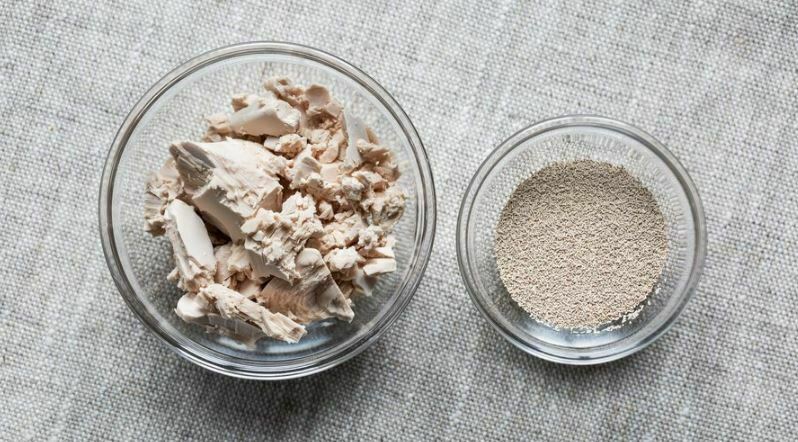
The difference between nutritional yeast and the fresh and dry yeasts used at home is that nutritional yeast is inactive. The cells in fresh and dry baking yeast are alive and can multiply under suitable conditions.
However, the cells in the nutritional yeast are not active, they are fragmented and cannot reproduce and develop.
Fresh and dry yeasts used to make bread and pastries at home are therefore not consumed by adding them to prepared foods in the same way as nutritional yeast.
What does nutritional yeast contain?
Nutritional yeast is a natural combination of amino acids, carbohydrates, vitamins and minerals and is rich in high-quality proteins. It contains all nine essential amino acids that must be taken with food. It is naturally low in sodium and calories and is fat-free.
It contains zinc, selenium, manganese and molybdenum, which are involved in gene regulation, metabolism, growth, reproduction and immune functions. It is not possible to make a definitive list of the content of nutritional yeast.
Nutrient content varies between brands and depends on whether the product has been fortified. It is therefore more sensible to choose a product by checking its label against your needs.
Although nutritional yeast does not contain any animal foods, it tastes similar to meat bouillon. This is because both nutritional yeast and meat bouillon contain amino acids that give them the same taste.
Nutritional yeasts are a good source of protein, vitamins and minerals for vegans as they do not contain animal food. Similarly, nutritional yeast is gluten-free and can be used as a reliable supplement for celiac patients. However, the product’s ingredient list should be checked for any additional ingredients that contain gluten.
What should you consider when buying nutritional yeast?
• The product must not be produced from Genetically Modified Organisms (GMOs).
• The individual should not be allergic to these yeasts.
• It is useful to stay away from products with added additives for enrichment; these additives are usually produced by synthetic means.
• It is worth noting that; the only difference between the products called “nutritional yeast” and the fresh and dry yeast used to make bread and dough at home is that the yeast cells are inactivated in nutritional yeasts.
The cells in baking yeast are not inactivated because the yeast needs to remain active in the dough. Fresh yeast has another difference: as its name suggests, it has a higher water content than nutritional yeast. In short, sourdough bread or a pastry made with dry yeast already contains the nutrients found in products called nutritional yeast.
How is nutritional yeast produced?
Nutritional yeast is generally produced by cultivating suitable strains of Saccharomyces cerevisiae under controlled conditions with sugar sources such as molasses.
The yeast cells are harvested, washed, heat-inactivated, dried and packaged. (USDA, 2014)
In yeast extract production, methods such as autolysis or enzymatic breakdown release the cell contents, and insoluble cell-wall fragments are separated. The resulting soluble fraction is concentrated or dried to obtain the final product. (Fu, 2025)
Note: This article is intended solely for general informational purposes. It does not constitute medical advice or personalized nutritional guidance. Nutritional needs may vary from person to person. Always consult a healthcare professional or a registered dietitian before making any dietary changes.
References
Raymond, J. L., & Morrow, K. (2023). Krause ve Mahan Besin ve Beslenme Bakım Süreci (16. baskı; G. Akbulut, Çev. Ed.). Nobel Tıp Kitabevleri.
Erkmen, O. (Ed.). (2021). Gıda Mikrobiyolojisi (6. baskı). Efil Yayınevi.
Organic Materials Review Institute / U.S. Department of Agriculture, National Organic Program. (2014). Yeast: Technical Evaluation Report — Handling/Processing.
Fu, Y. (2025). Yeast extract as a more sustainable food ingredient: Insights into flavor and bioactivity. Advances in Food and Nutrition Research, 114, 97–147.
National Institutes of Health, Office of Dietary Supplements. (2023). Vitamin B12: Fact Sheet for Consumers.
U.S. Food and Drug Administration. (n.d.). Questions and Answers on the Gluten-Free Food Labeling Final Rule.

Halil İbrahim Akgül
Halil Ibrahim Akgul, Ph.D., is an Assistant Professor of Food Engineering at Bayburt University, where he works in the Division of Food Sciences within the Faculty of Engineering. He received his B.Sc. in Food Engineering from Akdeniz University in 2010, followed by an M.Sc. and a Ph.D. in Food Engineering from Atatürk University in 2015 and 2020, respectively. His formally recognised academic fields are Food Sciences and Engineering, Food Technologies, Dairy and Dairy Products Technology, and Food Microbiology.
Dr. Akgul has more than fifteen years of professional, research, and academic experience in food science. Between 2011 and 2013, he worked as the food engineer responsible for operations at the Pilot Dairy and Bread Factory of Atatürk University’s Directorate of Agricultural Enterprises. This industrial experience, combined with his subsequent academic research, gave him extensive practical and scientific knowledge of milk processing, dairy production, food quality, hygiene, and product development.
His research is primarily focused on milk and dairy products, dairy microbiology, starter cultures, lactic acid bacteria, exopolysaccharides, butter technology, and the physicochemical, microbiological, sensory, and nutritional properties of foods. His studies have examined the quality and fatty-acid composition of traditional butter, aroma formation in butter produced with different starter cultures, raw-milk quality, the characterisation and antioxidant activity of bacterial exopolysaccharides, traditional dairy products such as çökelek and karın kaymağı, colostrum powder, and the use of fruit-derived ingredients in ice cream production.
His academic record includes peer-reviewed research articles published in national and international journals, including Mljekarstvo, Acta Scientiarum Technology, the Journal of Food Safety and Food Quality, the International Journal of Food Engineering, the Atatürk University Journal of Agricultural Faculty, and ATA Food Journal. Four of the research articles currently listed in his university profile were published in SCI-Expanded-indexed journals. He has also contributed to twelve national and international conference papers and presentations covering dairy products, food microbiology, butter quality, fatty-acid composition, starter cultures, exopolysaccharide-producing bacteria, colostrum, traditional foods, and functional ice-cream formulations.
Dr. Akgul has participated as a researcher or adviser in eleven completed scientific and applied research projects. These projects have addressed the modernisation of pilot dairy-processing facilities; the production and quality characteristics of colostrum powder; the physicochemical and microbiological quality of butter and raw milk; the identification of exopolysaccharide-producing lactic acid bacteria; the development and production optimisation of starter cultures for mould-ripened cheese; the standardisation of traditional dairy products; and the use of sloe berry and persimmon fibre in ice-cream production.
His teaching experience spans undergraduate, associate-degree, and graduate education. The courses he has taught include Food Chemistry, Analytical Chemistry, General Chemistry, Organic Chemistry, Fermented Dairy Products Technology, Butter Production and Processing Technology, Healthy Living and Nutrition, Organic Agriculture and Food, Popular Science, Digital Literacy, and Information Technologies. Through these courses, he combines fundamental food chemistry and engineering principles with dairy technology, nutrition, scientific literacy, and the practical communication of scientific knowledge.
He is the founder and Editor-in-Chief of Gıda ve Sağlık, a multilingual digital publication devoted to food, nutrition, health, food chemistry, food microbiology, and culinary science. Through this platform, he draws upon his academic background, teaching experience, research activity, and practical knowledge of food production to present scientifically grounded information in a detailed and accessible form for an international readership.