

Consumers have three options for drinking milk: raw milk, pasteurized milk and UHT milk. Comparing the alternatives and choosing the best one is natural, but accurate information is essential.
Comparisons between raw and packaged milk often contain inaccurate information. Some people who present themselves as experts create misleading impressions and give misleading advice.
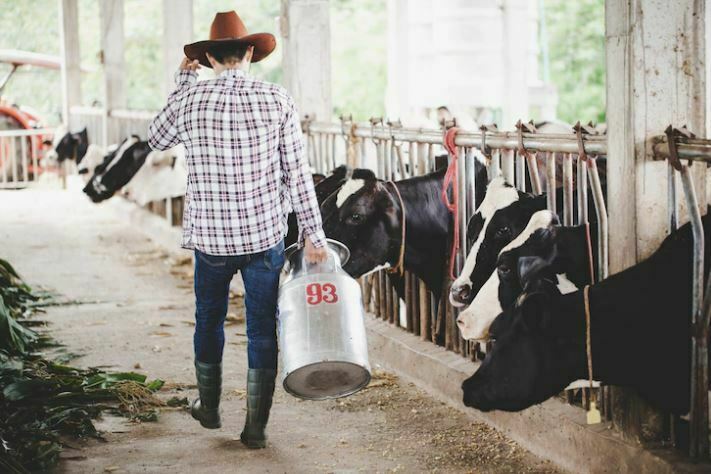
First of all, it should be noted that the milk of a naturally fed and healthy animal is very valuable and should of course be preferred. But, it is a very optimistic idea to think that all of the raw milk produced is milked from animals with these characteristics.
Milk can rapidly lose quality and spoil at ambient temperatures. Even high-quality milk must therefore be kept cold after milking and protected from microbial contamination to retain its quality.
Unfortunately, many farmers in Turkey lack knowledge about producing high-quality milk and preserving its quality. Farming is often based on methods passed down through generations. There are also people who act dishonestly in pursuit of profit.
Similarly, many consumers lack information about milk quality and its preservation. They often rely on hearsay or advice from people who describe themselves as experts.
The appearance of raw milk cannot tell consumers enough about its quality. Many consider it sufficient that the milk does not curdle when boiled, but milk quality involves more than acidity.
Looking at milk cannot reveal whether it contains antibiotics or aflatoxin. Consumers may notice a problem when milk fails to set into yogurt, but many do not know that antibiotic residues can be responsible.
When you buy raw milk, you cannot know;
1. How many microorganisms it contains,
2. Whether it will curdle when boiled,
3. Whether it contains antibiotics,
4. Whether it contains aflatoxin,
5. Whether preservative chemicals have been added,
6. Whether the animal has an udder infection (mastitis),
7. Whether it has been adulterated with water,
8. Whether some of its fat has been removed.
Buying raw milk means trusting that neither the producer nor the seller has adulterated it and that it has been produced responsibly. There are certainly farmers who produce very high-quality, wholesome milk.
It would nevertheless be overly optimistic to assume that all producers do so. Research shows why this trust needs to be considered carefully.
Quality of raw milk sold
In a very recent study published in April 2022, researchers collected 60 raw milk samples from the 9 most densely populated districts of Ankara and investigated these milk samples for antibiotic residues (Mortaş et al., 2022).
The researchers found that antibiotic residue concentrations in 30% of the street-vended milk samples exceeded the regulatory limits. Antibiotic residues in milk are concerning because of possible health risks and their contribution to antibiotic resistance.
In another study investigating the quality of raw milk sold in Şanlıurfa in 2017, Göncü et al. examined some chemical and microbiological properties of 60 raw milk samples, 30 each in winter and summer, from different points in Şanlıurfa (Göncü et al., 2017).
The researchers determined that the fat ratio in winter milk was 3.3% on average and 2.2% in summer milk. These fat rates are quite low for raw milk.
The microbiological findings were more striking: all 30 winter and 30 summer street-vended milk samples failed to meet the total aerobic mesophilic bacterial count requirements of the Turkish Food Codex Communiqué on Raw and Heat-Treated Drinking Milk.
Many similar studies could be cited, but these examples are sufficient to illustrate the situation.
UHT and Pasteurized milk
Despite the research, it is often claimed that industrial processing destroys the nutritional value of pasteurized and UHT milk. Some commentators even call these products “white water” rather than milk.
Turkish scientists published a useful review of the subject in 2022 (Kilic-Akyilmaz et al., 2022). In brief, heat treatment mainly affects milk minerals, vitamins and proteins.
Losses in pasteurized milk are considered very small and insignificant compared to UHT milk and raw milk consumed by boiling. In this respect, to state that pasteurized and UHT milk is no longer nutritious is “clearly ignoring scientific data.” Pasteurized and UHT milk can preserve their nutritional values at least as much as raw and boiled milk.
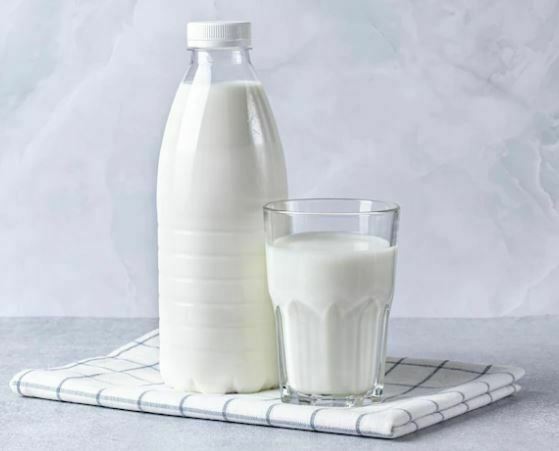
Packaged-milk producers require raw milk purchased from farmers to meet certain quality criteria. These include acidity, microbial load, antibiotic and aflatoxin residues, and checks for adulteration by adding water or removing fat.
These checks are necessary for processing, preventing economic losses and protecting public health. In this way, packaged-milk producers consider consumers’ health and economic interests from the outset.
Milk acidity is a leading criterion. Others include antibiotic residues, protein and fat content, aflatoxin and adulteration checks. In this respect, UHT and pasteurized milk can be described as safer than raw milk.
Another important issue here is the packaging material. The packaging of UHT and Pasteurized milk can largely prevent the loss of vitamins during storage.
In addition; raw milk can be kept in the refrigerator for a maximum of 1 day without boiling. Pasteurized milk, up to 3-4 days in the refrigerator; UHT milk can be stored for up to 4 months if it is not opened.
The claim that pasteurized and UHT milk last longer because they contain preservatives is incorrect: these products contain no additives or preservatives. Consumers may attribute UHT milk’s long shelf life to preservatives, but the same principle is familiar to people who prepare preserves at home.
During canning, the jar is heat-treated, destroying the microorganisms present. Because the jar is sealed, microorganisms cannot enter from outside. A properly prepared preserve can keep for 6–24 months.
The same principle applies to UHT milk. Appropriate heat treatment destroys microorganisms, and preventing subsequent contamination allows the milk to keep for a long time without spoiling.
It is therefore incorrect to claim that UHT milk contains preservatives. Its time–temperature treatment is designed to minimize damage to the milk, so its nutritional value is minimally affected.
Pasteurized and UHT milk are more reasonable choices than raw milk. Pasteurized milk is preferable if it will be consumed soon after purchase. If it is being kept at home for an uncertain date of use—within its expiry date—UHT milk is more practical. UHT milk also has a price advantage over pasteurized milk.
UHT is an abbreviation; Ultra-high temperature processing. This process is generally applied at 135-140 oC, 2-4 seconds temperature-time norm. There is a very short-term shock heat application. Subsequently, the milk is rapidly cooled to 4oC.
In pasteurized milk production, there are 3 different temperature-time norms;
Long time pasteurization at low temperature (LTLT, batch pasteurization); 63-65°C, 30 minutes,
Short-term pasteurization at high temperature (HTST, continuous pasteurization); 71-74oC, 40-45 seconds,
Very high temperature pasteurization (ultra pasteurization); 85-90oC, 8-15 seconds
Generally, the HTST norm is used in the industry, which is 40-45 seconds at 71-74oC.
References
Metin, M. (2014). Süt Teknolojisi: Sütün Bileşimi ve İşlenmesi (13. baskı). Ege Üniversitesi Basımevi.
Üçüncü, M. (2024). Süt ve Mamülleri Teknolojisi (8. baskı). Sidas Medya.
Erkmen, O. (Ed.). (2021). Gıda Mikrobiyolojisi (6. baskı). Efil Yayınevi.
Mortaş, H., Navruz Varlı, S., & Bilici, S. (2022). Sokak Sütlerinde Gizli Tehlike: Antibiyotik Kalıntısı. Beslenme ve Diyet Dergisi, 50(1), 19–26.
Göncü, B. G., Çelikel, A., Akın, M. B., & Akın, M. S. (2017). Şanlıurfa’da satışa sunulan sokak sütlerinin bazı kimyasal ve mikrobiyolojik özelliklerinin belirlenmesi üzerine bir araştırma. Harran Üniversitesi Mühendislik Dergisi, 2(2), 15–23.
Kilic-Akyilmaz, M., Ozer, B., Bulat, T., & Topcu, A. (2022). Effect of heat treatment on micronutrients, fatty acids and some bioactive components of milk. International Dairy Journal, 126, 105231.
U.S. Food and Drug Administration. (n.d.). Raw milk misconceptions and the danger of raw milk consumption. FDA.
T.C. Gıda, Tarım ve Hayvancılık Bakanlığı. (2017). Çiğ Sütün Arzına Dair Tebliğ (Tebliğ No: 2017/20). Resmî Gazete, 27 Nisan 2017, Sayı 30050.
Here is an article that might interest you; Milk; Definition, Composition and Nutritional Value

Halil İbrahim Akgül
Halil Ibrahim Akgul, Ph.D., is an Assistant Professor of Food Engineering at Bayburt University, where he works in the Division of Food Sciences within the Faculty of Engineering. He received his B.Sc. in Food Engineering from Akdeniz University in 2010, followed by an M.Sc. and a Ph.D. in Food Engineering from Atatürk University in 2015 and 2020, respectively. His formally recognised academic fields are Food Sciences and Engineering, Food Technologies, Dairy and Dairy Products Technology, and Food Microbiology.
Dr. Akgul has more than fifteen years of professional, research, and academic experience in food science. Between 2011 and 2013, he worked as the food engineer responsible for operations at the Pilot Dairy and Bread Factory of Atatürk University’s Directorate of Agricultural Enterprises. This industrial experience, combined with his subsequent academic research, gave him extensive practical and scientific knowledge of milk processing, dairy production, food quality, hygiene, and product development.
His research is primarily focused on milk and dairy products, dairy microbiology, starter cultures, lactic acid bacteria, exopolysaccharides, butter technology, and the physicochemical, microbiological, sensory, and nutritional properties of foods. His studies have examined the quality and fatty-acid composition of traditional butter, aroma formation in butter produced with different starter cultures, raw-milk quality, the characterisation and antioxidant activity of bacterial exopolysaccharides, traditional dairy products such as çökelek and karın kaymağı, colostrum powder, and the use of fruit-derived ingredients in ice cream production.
His academic record includes peer-reviewed research articles published in national and international journals, including Mljekarstvo, Acta Scientiarum Technology, the Journal of Food Safety and Food Quality, the International Journal of Food Engineering, the Atatürk University Journal of Agricultural Faculty, and ATA Food Journal. Four of the research articles currently listed in his university profile were published in SCI-Expanded-indexed journals. He has also contributed to twelve national and international conference papers and presentations covering dairy products, food microbiology, butter quality, fatty-acid composition, starter cultures, exopolysaccharide-producing bacteria, colostrum, traditional foods, and functional ice-cream formulations.
Dr. Akgul has participated as a researcher or adviser in eleven completed scientific and applied research projects. These projects have addressed the modernisation of pilot dairy-processing facilities; the production and quality characteristics of colostrum powder; the physicochemical and microbiological quality of butter and raw milk; the identification of exopolysaccharide-producing lactic acid bacteria; the development and production optimisation of starter cultures for mould-ripened cheese; the standardisation of traditional dairy products; and the use of sloe berry and persimmon fibre in ice-cream production.
His teaching experience spans undergraduate, associate-degree, and graduate education. The courses he has taught include Food Chemistry, Analytical Chemistry, General Chemistry, Organic Chemistry, Fermented Dairy Products Technology, Butter Production and Processing Technology, Healthy Living and Nutrition, Organic Agriculture and Food, Popular Science, Digital Literacy, and Information Technologies. Through these courses, he combines fundamental food chemistry and engineering principles with dairy technology, nutrition, scientific literacy, and the practical communication of scientific knowledge.
He is the founder and Editor-in-Chief of Gıda ve Sağlık, a multilingual digital publication devoted to food, nutrition, health, food chemistry, food microbiology, and culinary science. Through this platform, he draws upon his academic background, teaching experience, research activity, and practical knowledge of food production to present scientifically grounded information in a detailed and accessible form for an international readership.