
Roles and Functions of Proteins in the Body
1. Proteins are the building blocks of the cell, which is the smallest living unit of living organisms.
2. Proteins are involved in the structure of body tissues. They are used in the repair of tissues.
3. All enzymes and most hormones have proteins in their structure.
4. Proteins have transport and storage functions in the body. Hemoglobin and myoglobin carry oxygen, while transferrin carries iron in the blood. The liver stores iron.
5. Proteins are a critical element of the immune system. Antibodies produced against foreign substances entering the body are composed of protein.
6. Proteins provide movement and support to the body.
7. Proteins provide impulse formation and transmission in the nervous system.
8. Proteins provide control of metamorphosis and growth in the body.
9. Proteins are not the body’s primary energy source, but they can also be used as an energy source when the body does not have enough energy sources. The body’s primary source of energy is carbohydrates.
Essential Amino Acids
The building blocks of proteins are amino acids. The existence of nearly 200 different amino acids has been identified so far. Generally, 20 of them are included in the structure of proteins. These amino acids are;
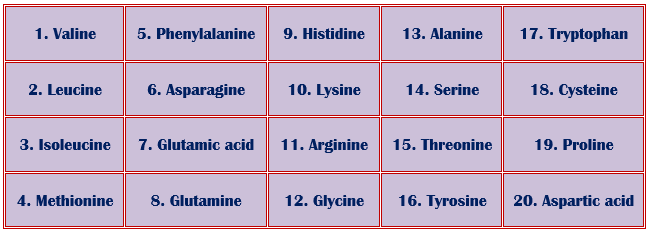
12 of these amino acids can be produced in the human body. However, eight amino acids cannot be produced in the body. These amino acids, which cannot be made in the body and must be taken from foods, are called “essential amino acids”;

Arginine and histidine are also known to be essential amino acids for babies.
Protein Quality in Foods
Proteins are produced according to the information encoded in DNA. Their structure differs among organisms; in this sense, proteins are specific to the organisms that produce them.
The proteins in foods therefore differ according to their source. Their nutritional value is assessed through protein quality, which is related to biological value and digestibility.
The amino acid profile generally determines the biological value of proteins. Digestibility is determined by the amount of nitrogen absorbed from the intestines after the individual consumes that protein.
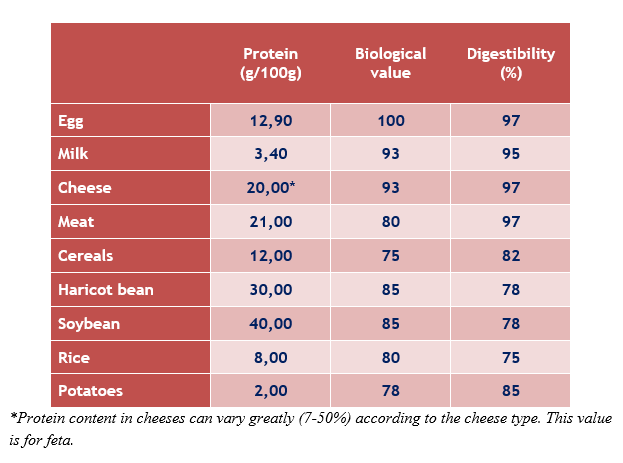
In terms of biological value and digestibility, animal protein sources are superior to plant protein sources.
Eggs are the food with the highest quality protein. An average egg weighs 50 grams and contains about 7 grams of protein.
Milk is as valuable as eggs as a source of high-quality protein. A glass of milk contains about 8 grams of protein. There are approximately 9 grams of protein in 150 grams of yogurt and about 20 grams in 100 grams of Turkish white cheese.
Among cheeses, lor made from whey has a higher protein quality than cheeses such as Turkish white cheese and kaşar.
This is because lor made from whey generally contains whey proteins, whereas the main protein in other cheeses is casein. The biological value of whey proteins is higher than that of casein, another protein fraction in milk.
Meat proteins contain all the amino acids an individual needs. One hundred grams of beef contains an average of 21 grams of protein.
Chicken meat and fish meat also have similar protein quality to beef. However, fish meat can be digested faster.
In addition to its amino acid profile, fish meat also has a privileged place in terms of fatty acid profile. Fish meat is also an important source of essential fatty acids.
Plant foods have a lower value than animal foods in terms of protein quality. The most important plant protein source foods are; legumes 27-41% (beans, chickpeas, peas, etc.), cereals 8-12% (wheat, rice, etc.) and oilseeds such as peanuts (25%). Fruits usually have less than 1% protein.
If plant foods are evaluated in terms of the essential amino acids they contain;
- Legumes are poor in methionine,
- Cereals are usually poor in lysine,
- Corn is poor in lysine and tryptophan,
- Peanuts are poor in lysine, tryptophan, methionine and threonine.
How Much Protein Should You Consume Per Day?
Short Answer: The World Health Organization (WHO) recommended daily protein intake for adults in 2007, which is generally accepted, is 0.83 grams per kilogram of body weight. However, it’s important to remember that this amount is recommended for healthy individuals and that age group. This recommendation does not include individuals with chronic diseases or those at high risk due to age, genetics, or lifestyle factors such as smoking, alcohol consumption, or intense exercise.
The recommended daily protein intake for different age and condition groups is detailed below, citing scientific sources. However, it’s important to remember that these values are only a general guideline and should be considered a guide rather than a recommendation. When determining your diet, you should consult with a qualified physician or dietitian who can tailor it to your specific condition and circumstances.
In fact, there is no single, widely accepted reference for determining the body’s daily protein needs. There are two important reasons for this. First, determining the body’s protein needs is difficult, and different methods are used. Second, different institutions and research groups define the concept of “sufficient” for the body differently.
However, two generally accepted sources can be cited today. The first is the joint expert consultation report titled “Protein and amino acid requirements in human nutrition,” published in 2007 by the World Health Organization (WHO), in collaboration with the Food and Agriculture Organization of the United Nations (FAO), and the United Nations University (UNU). (see Protein and amino acid requirements in human nutrition, World Health Organization, PDF file)
The second is a review article titled “Protein Nutrition: Understanding Structure, Digestibility, and Bioavailability for Optimal Health” by Ajomiwe et al., published in the peer-reviewed scientific journal Foods in 2024. Despite its recent publication, this review article attracted considerable attention and quickly garnered a high number of citations. If you have access to it, I recommend you check it out. see Protein Nutrition: Understanding Structure, Digestibility, and Bioavailability for Optimal Health
The table below summarizes the recommended daily protein intake for different groups, based on the sources above.
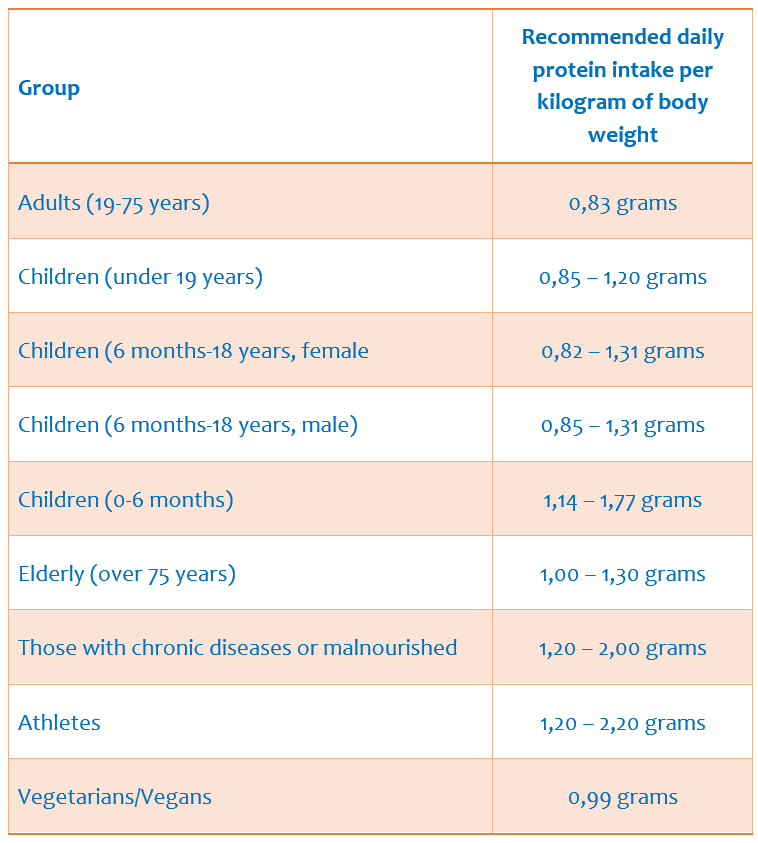
For example, using the data in the table,
- The recommended daily protein intake for an adult weighing 70 kilograms is 58.1 grams, calculated by multiplying 70 x 0.83.
- A 76-year-old individual weighing 70 kilograms falls into the elderly group, and the recommended daily protein intake for this individual is 70-91 grams, calculated by multiplying 70 x 1.00 and 70 x 1.30.
It should also be noted that the table provides a range for each group, rather than a single value, because different studies have yielded different values. Therefore, a single reference value cannot be provided.
The first thing that stands out when looking at the table is that the recommended daily protein intake varies depending on age and body weight.
Generally, protein needs are high during the first year of life, in infancy. Protein intake during the first year of life is considered one of the main determinants of growth later in life.
While protein needs decrease slightly after the first year, protein needs increase relatively as growth accelerates during adolescence. Boys may need more protein than girls due to their higher muscle mass and growth rate. Children in sports or physical activities may need additional protein to support muscle repair and growth. For overweight or obese children, protein requirements may need to be calculated based on the ideal body weight for that age.
Inadequate protein intake can lead to growth failure in children, leading to lower-than-ideal height and weight. Proteins also play a vital role in supporting the immune system; therefore, protein deficiency can negatively impact immune function.
Energy needs of adults generally vary depending on age, occupation, amount of physical activity, and basal metabolic rate, with men requiring more energy than women. Changes in body composition and physical activity in aging can reduce energy requirements, making individuals susceptible to malnutrition, protein, and other nutrient deficiencies. Therefore, consuming 1.0–1.3 grams of protein per kilogram of body weight per day is important to prevent muscle loss and maintain overall health.
Pregnant women’s requirements increase to support fetal growth and maternal physiological changes. The recommended protein intake for the first trimester of pregnancy is 0.8 grams per kilogram of body weight. In the second and third trimesters of pregnancy, it is estimated to be 1.1 grams per kilogram of body weight. (Murphy et al. 2021, see Adequacy and Sources of Protein Intake among Pregnant Women in the United States, Nutrients).
Although data on pregnancy-specific protein requirements are lacking due to practical and ethical concerns, another study estimated the average daily requirement for protein in healthy pregnant women as 1.22 grams per kilogram of body weight in early pregnancy (11–20 weeks) and 1.52 grams per kilogram of body weight in later pregnancy (31–38 weeks). (Stephens et al. 2015, see Protein requirements of healthy pregnant women during early and late gestation are higher than current recommendations, The Journal of Nutrition) However, I feel compelled to reiterate that, although these values are derived from scientific studies, they are not necessarily individual-specific and are for general information only. You should determine your specific diet in consultation with your doctor.
The International Society of Sports Nutrition (ISSN) recommends a daily protein intake of 1.2 to 2.2 grams per kilogram of body weight for athletes.
The table gives higher protein intake values for vegetarians and vegans than for other adults because their protein sources are exclusively plant-based. As discussed above, plant proteins have lower quality and digestibility than animal proteins, so the values are higher than those given for an adult eating a balanced diet that includes all food groups. Protein-rich plant foods such as legumes, tofu and tempeh can be recommended for vegans and vegetarians.
Consuming excessive amounts of protein can cause some problems in the body, such as;
1. Disorders such as “amino acid antagonism” and “toxicity,”
2. The excess protein is converted into fat in the body and the adipose tissue increases,
3. Especially in athletes, excreting uric acid can lead to substantial water loss from the body,
4. It can cause an increase in calcium excretion.
Note: This article is intended solely for general informational purposes. It does not constitute medical advice or personalized nutritional guidance. Nutritional needs may vary from person to person. Always consult a healthcare professional or a registered dietitian before making any dietary changes.
References
Raymond, J. L., & Morrow, K. (2023). Krause ve Mahan Besin ve Beslenme Bakım Süreci (16. baskı; G. Akbulut, Çev. Ed.). Nobel Tıp Kitabevleri.
Aksoy, M. (Ed.). (2022). Beslenme Biyokimyası (7. baskı). Ankara Nobel Tıp Kitabevleri.
Sencer, E., & Orhan, Y. (2005). Beslenme. İstanbul Medikal Yayıncılık.
Gökalp, H. Y., Nas, S., & Certel, M. (2002). Biyokimya-I: Temel Yapılar ve Kavramlar. Pamukkale Üniversitesi Mühendislik Fakültesi.
Joint WHO/FAO/UNU Expert Consultation. (2007). Protein and amino acid requirements in human nutrition. World Health Organization. WHO Technical Report Series, 935.
Ajomiwe, N., Boland, M., Phongthai, S., Bagiyal, M., Singh, J., & Kaur, L. (2024). Protein Nutrition: Understanding Structure, Digestibility, and Bioavailability for Optimal Health. Foods, 13(11), 1771.
Murphy, M. M., Higgins, K. A., Bi, X., & Barraj, L. M. (2021). Adequacy and Sources of Protein Intake among Pregnant Women in the United States, NHANES 2003–2012. Nutrients, 13(3), 795.
Stephens, T. V., Payne, M., Ball, R. O., Pencharz, P. B., & Elango, R. (2015). Protein requirements of healthy pregnant women during early and late gestation are higher than current recommendations. The Journal of Nutrition, 145(1), 73–78.
Here’s an article that might interest you; Proteins; Amino Acids, Structure and Classification

Halil İbrahim Akgül
Halil Ibrahim Akgul, Ph.D., is an Assistant Professor of Food Engineering at Bayburt University, where he works in the Division of Food Sciences within the Faculty of Engineering. He received his B.Sc. in Food Engineering from Akdeniz University in 2010, followed by an M.Sc. and a Ph.D. in Food Engineering from Atatürk University in 2015 and 2020, respectively. His formally recognised academic fields are Food Sciences and Engineering, Food Technologies, Dairy and Dairy Products Technology, and Food Microbiology.
Dr. Akgul has more than fifteen years of professional, research, and academic experience in food science. Between 2011 and 2013, he worked as the food engineer responsible for operations at the Pilot Dairy and Bread Factory of Atatürk University’s Directorate of Agricultural Enterprises. This industrial experience, combined with his subsequent academic research, gave him extensive practical and scientific knowledge of milk processing, dairy production, food quality, hygiene, and product development.
His research is primarily focused on milk and dairy products, dairy microbiology, starter cultures, lactic acid bacteria, exopolysaccharides, butter technology, and the physicochemical, microbiological, sensory, and nutritional properties of foods. His studies have examined the quality and fatty-acid composition of traditional butter, aroma formation in butter produced with different starter cultures, raw-milk quality, the characterisation and antioxidant activity of bacterial exopolysaccharides, traditional dairy products such as çökelek and karın kaymağı, colostrum powder, and the use of fruit-derived ingredients in ice cream production.
His academic record includes peer-reviewed research articles published in national and international journals, including Mljekarstvo, Acta Scientiarum Technology, the Journal of Food Safety and Food Quality, the International Journal of Food Engineering, the Atatürk University Journal of Agricultural Faculty, and ATA Food Journal. Four of the research articles currently listed in his university profile were published in SCI-Expanded-indexed journals. He has also contributed to twelve national and international conference papers and presentations covering dairy products, food microbiology, butter quality, fatty-acid composition, starter cultures, exopolysaccharide-producing bacteria, colostrum, traditional foods, and functional ice-cream formulations.
Dr. Akgul has participated as a researcher or adviser in eleven completed scientific and applied research projects. These projects have addressed the modernisation of pilot dairy-processing facilities; the production and quality characteristics of colostrum powder; the physicochemical and microbiological quality of butter and raw milk; the identification of exopolysaccharide-producing lactic acid bacteria; the development and production optimisation of starter cultures for mould-ripened cheese; the standardisation of traditional dairy products; and the use of sloe berry and persimmon fibre in ice-cream production.
His teaching experience spans undergraduate, associate-degree, and graduate education. The courses he has taught include Food Chemistry, Analytical Chemistry, General Chemistry, Organic Chemistry, Fermented Dairy Products Technology, Butter Production and Processing Technology, Healthy Living and Nutrition, Organic Agriculture and Food, Popular Science, Digital Literacy, and Information Technologies. Through these courses, he combines fundamental food chemistry and engineering principles with dairy technology, nutrition, scientific literacy, and the practical communication of scientific knowledge.
He is the founder and Editor-in-Chief of Gıda ve Sağlık, a multilingual digital publication devoted to food, nutrition, health, food chemistry, food microbiology, and culinary science. Through this platform, he draws upon his academic background, teaching experience, research activity, and practical knowledge of food production to present scientifically grounded information in a detailed and accessible form for an international readership.