
1. Definition and History of Yogurt
1.1. What is yogurt?
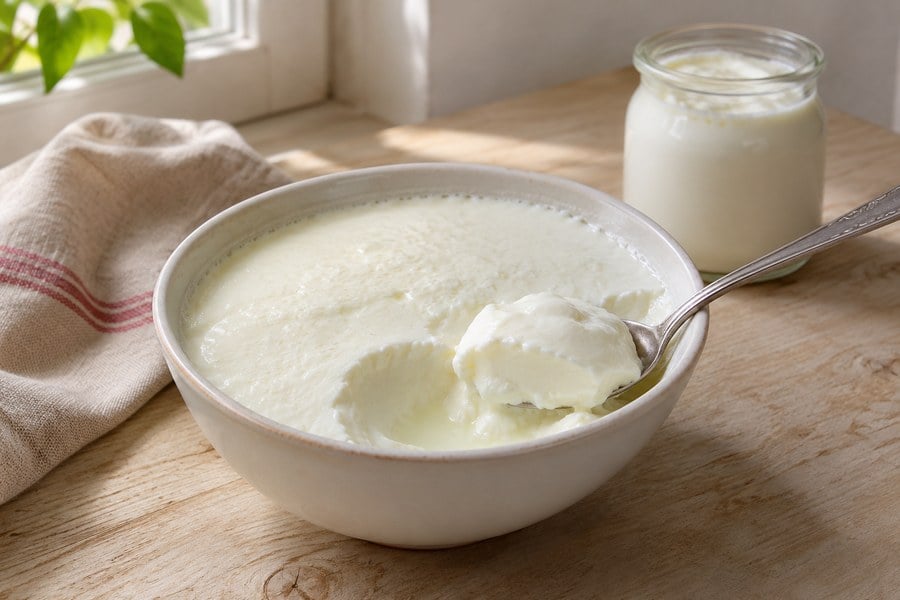
Yogurt is a dairy product obtained by fermenting cow’s, sheep’s, goat’s or buffalo’s milk, or mixtures of these milks, primarily with the bacteria Streptococcus thermophilus and Lactobacillus delbrueckii subsp. bulgaricus. It is recognized by its white to cream-colored appearance, distinctive milk and fermentation aroma, mildly or noticeably sour taste, and consistency that varies with the type of product.
Its structure rests on a network of milk proteins that holds water and other components within it. Alongside water, its composition includes proteins, milk fat, lactose and other carbohydrates, minerals, vitamins, organic acids formed through fermentation and, in varieties containing live cultures, yogurt bacteria. Its consistency can range from a firm gel that can be cut with a spoon to a freely flowing, drinkable texture. It can be made with or without a cream layer, regular or strained, at different fat levels, and in plain, fruit, flavored and lactose-free varieties.
1.2. The history of yogurt, from Central Asia to the present
One of the most widely recounted accounts of yogurt’s origins is that it was developed by the pastoral Turkic communities of Central Asia. Milk was an important food in nomadic life, but its rapid spoilage made it difficult to store and transport. Turning milk into yogurt, and then straining or drying it when needed, became a way to make use of this valuable food for longer. As Turkic peoples migrated to Anatolia and the Balkans, the tradition of making and eating yogurt spread across a wide geographical area.
According to one account of how the first yogurt appeared, milk carried in containers made from animal skins gradually became sour and thickened; people noticed this change and learned to treat subsequent batches of milk in the same way. This is a traditional story told to explain yogurt’s discovery. The part we can explain through modern dairy science is the acidification and coagulation of milk by lactic acid bacteria growing under suitable conditions.
Written evidence of yogurt’s place in Turkish food culture is much more concrete. Yogurt is mentioned in the eleventh-century works Dîvânu Lugâti’t-Türk by Mahmud al-Kashgari and Kutadgu Bilig by Yusuf Khass Hajib. These records show that yogurt was known and consumed by Turkic peoples at that time. In Seljuk and Ottoman cuisines, it remained a staple food eaten on its own, made into ayran, and used in soups, dishes and sauces.
Today, yogurt’s place in Turkish culture extends far beyond a bowl served at the table. It is drunk as ayran, provides refreshment in cacık, and goes into making tarhana; it complements the flavor of many foods, from soups and mantı to kebabs and vegetable dishes.
Setting aside some yogurt at home to start the next batch is also an everyday example of this production knowledge passing from one generation to the next. It is hardly surprising that such a familiar food has a place in Turkish expressions, too. “Someone whose mouth has been burned by milk blows even on yogurt” describes becoming more cautious in similar situations after a bad experience. “Every brave man has his own way of eating yogurt” means that everyone has their own way of doing things. “Nobody says their own yogurt is sour” refers to our reluctance to criticize what we have made or what belongs to us. In this way, yogurt nourishes everyday Turkish speech through proverbs describing behavior and attitudes to life, as well as being a food.
The name of the product is another striking trace of this cultural spread. Yoğurt is one of the Turkish words that have entered many of the world’s languages. English yogurt/yoghurt, French yaourt/yogourt and Spanish yogur derive from the Turkish name yoğurt. The fact that this food is now known across much of the world by its Turkish name, or forms derived from it, keeps its connection with Turkish culture alive in everyday language.
Another famous story about yogurt becoming known in Europe concerns King Francis I of France. According to the account, in the sixteenth century a physician arriving from the Ottoman Empire gave yogurt to the king, who had suffered a prolonged intestinal illness; after his recovery, yogurt attracted attention at the French court. This story is among the historical traditions describing yogurt’s recognition in Europe.
Inoculating milk with a small amount of the previous yogurt was practiced long before microorganisms were understood. Understanding the microbiological foundations of fermentation in the nineteenth century paved the way for this accumulated knowledge to become controlled production. Stamen Grigorov’s work on the yogurt bacterium in 1905 was an important milestone. As defined starter cultures, controlled heating, homogenization, the cold chain and packaging technologies became widespread in the twentieth century, yogurt retained its traditional identity while also becoming a dairy product manufactured on a large scale.
2. Composition of Yogurt
We can examine yogurt’s composition in two main groups: water and dry matter. Dry matter comprises proteins, milk fat, carbohydrates, minerals, organic acids and other components present in smaller quantities. In yogurt with live cultures, microorganisms are also a biological part of this composition. Yogurt should not be viewed simply as a food in which milk components sit side by side; these components change during fermentation and interact to form the product’s structure.
The quantities of these components vary considerably with the type of yogurt. For example, in the USDA record below, plain whole-milk yogurt contains approximately 85.3% water and 14.7% dry matter, with 3.82% protein and 4.48% fat. In the whole-milk Greek-style yogurt example from the same database, water falls to 81.3% while protein rises to 9%. A reduced-fat yogurt may also contain more protein than another whole-milk yogurt because it has been enriched with milk-derived solids.
| Yogurt example | Water (%) | Protein (%) | Fat (%) | Carbohydrate (%) |
|---|---|---|---|---|
| Plain, whole milk | 85.27 | 3.82 | 4.48 | 5.57 |
| Plain, low fat | 85.07 | 5.25 | 1.55 | 7.04 |
| Plain, nonfat milk | 85.23 | 5.73 | 0.18 | 7.68 |
| Greek-style, whole milk, plain | 81.30 | 9.00 | 5.00 | 3.98 |
| Greek-style, nonfat, plain | 85.10 | 10.19 | 0.39 | 3.60 |
USDA FoodData Central records: 2259793, 170886, 170887, 171304 and 170894. Percentages express grams per 100 g of product. These are reference compositions for different products, rather than experimental results for the same yogurt with its fat content adjusted or the legal classification limits in Türkiye. Carbohydrate was calculated by difference; this column should not be read directly as lactose content.
To see the effect of the animal milk used, we can also look at yogurts made with different milks within the same study. In the experimental products below, sheep’s and buffalo’s milk yogurts have higher fat and total dry matter contents.
| Milk used for yogurt | Water (%) | Dry matter (%) | Protein (%) | Fat (%) | Ash (%) |
|---|---|---|---|---|---|
| Cow’s milk | 84.75 | 15.25 | 4.25 | 4.55 | 0.82 |
| Goat’s milk | 84.41 | 15.59 | 5.04 | 4.77 | 0.87 |
| Sheep’s milk | 78.58 | 21.42 | 6.11 | 9.35 | 1.03 |
| Buffalo’s milk | 80.48 | 19.52 | 5.31 | 8.25 | 0.93 |
Terzioğlu and colleagues, 2023, Table 1. All milks in the study received 3% skimmed cow’s milk powder, so the table does not represent the fixed composition of unfortified milks or all commercial yogurts. Water percentages were calculated by subtracting reported dry matter from 100. Ash is an analytical value used to assess mineral content.
We can compare plain and fruit varieties using experimental products prepared from the same base yogurt. In Tarakçı and Küçüköner’s study, different fruit preparations were added to the base yogurt at 7%, and the following compositions were measured. This shows that both the type of fruit and the form of preparation, such as marmalade or fruit paste, change the composition.
| Yogurt variety | Water (%) | Dry matter (%) | Protein (%) | Fat (%) | Ash (%) |
|---|---|---|---|---|---|
| Plain control yogurt | 85.42 | 14.58 | 3.80 | 3.18 | 1.09 |
| With cornelian cherry marmalade | 83.52 | 16.48 | 4.09 | 2.90 | 0.85 |
| With rosehip marmalade | 84.89 | 15.11 | 3.60 | 3.03 | 0.90 |
| With sour cherry jam | 82.61 | 17.39 | 3.73 | 3.15 | 0.82 |
| With date paste | 81.75 | 18.25 | 3.58 | 3.00 | 0.90 |
Tarakçı and Küçüköner, 2003, Table 1; first day of storage. The base yogurt was made from cow’s milk enriched with 2% skimmed milk powder. Fruit samples contained 7% fruit preparation. Water percentages were calculated from reported dry matter; values refer to the products in that study.
2.1. Water and dry matter
Water is yogurt’s most abundant component. However, yogurt is not a simple mixture of solid particles in water. The three-dimensional network formed by proteins holds most of the water in its spaces; some water also interacts more closely with proteins and other components. This network is what makes it possible to scoop up a yogurt containing a proportion of water comparable to liquid milk.
The sum of the components remaining after water is removed is called dry matter. Subtracting fat from this total gives the nonfat solids. For example, a yogurt with 15% dry matter and 4% fat contains approximately 11% nonfat solids. This distinction matters: when assessing consistency, the proportions of protein, fat and carbohydrate within the dry matter influence the result as much as the total dry matter content.
Dry matter can be increased before production by adding milk-derived ingredients or removing some of the water. Water loss may occur through evaporation in industrial production, or through vaporization during heating in an open vessel at home. In strained yogurt, concentration is achieved by separating part of the whey after fermentation. These processes do not affect composition in the same way: evaporation mainly removes water, whereas straining also removes some soluble components with it.
Whey separation is related to this as well. When the protein network releases some of the liquid it holds, whey accumulates on the surface. Its amount depends on protein level, heat treatment, culture, acidity and the mechanical forces applied to the coagulum. A high water content therefore does not mean high whey separation; a network that holds water well can give even a yogurt with a high water content a smooth appearance.
2.2. Carbohydrates; lactose and carbohydrates changed by fermentation
The principal milk-derived carbohydrate in plain yogurt is lactose, a disaccharide consisting of one glucose and one galactose unit. Yogurt bacteria break it down with the enzyme β-galactosidase, using the portion they can metabolize for energy and forming fermentation products, chiefly lactic acid. Depending on the strain, some galactose may accumulate in the product. Yogurt’s carbohydrate composition consequently does not remain identical to that of the starting milk.
Only part of the lactose is consumed during fermentation, so regular yogurt continues to contain lactose. The starting milk, added milk powder, concentration and straining also affect the amount remaining. A yogurt enriched with milk powder may contain more lactose than another unfortified milk despite fermentation. Simply thinking that “the bacteria consumed the carbohydrate” is not enough; the starting composition must also be considered.
In lactose-free yogurt production, the enzyme lactase splits lactose into smaller monosaccharides. Because glucose and galactose taste sweeter than lactose, the product can taste sweeter without added sugar. Fruit or sweetened yogurts may also contain sucrose and carbohydrates from fruit. Total carbohydrate, total sugars, added sugars and lactose in nutrition information should therefore not be used interchangeably.
2.3. Proteins; caseins, whey proteins and peptides
Yogurt proteins come mainly from the milk used to make it. In cow’s milk, approximately 80% of the proteins are caseins and 20% are whey proteins. Yogurt’s protein content and the ratio between these groups may change with the milk species, milk powder or protein ingredients used, and concentration method. Enriching with casein rather than whey protein, for example, does not produce the same structure even when the total protein content is identical.
Caseins consist primarily of the αs1-, αs2-, β- and κ-casein fractions. In milk, these proteins occur with calcium phosphate in small structures called micelles. During yogurt production, acid formed by the bacteria changes the micelles’ charge and mineral balance. Protein particles interact to form a continuous network; the yogurt coagulum develops as this network forms. Casein is therefore both a nutrient we eat and yogurt’s supporting framework.
The main whey proteins include β-lactoglobulin and α-lactalbumin; serum albumin, immunoglobulins, lactoferrin and other minor protein fractions are present too. The heat treatment applied to yogurt milk changes these proteins’ natural folding. β-Lactoglobulin in particular can interact with κ-casein and other proteins to become part of the gel, improving water retention and the strength of the coagulum. This change represents a change in the protein’s structure and relationships with other proteins, rather than its disappearance.
During fermentation, the cultures’ proteinases and peptidases break down some milk proteins into smaller peptides and free amino acids. The bacteria use these components for growth, while flavor and aroma development also benefit. The extent of breakdown depends on the strain and production conditions. Excessive proteolysis may cause an undesirable bitter taste, so more protein breakdown does not always mean better yogurt.
Removing part of the water and whey concentrates protein per 100 grams of strained yogurt. The preceding heat treatment also affects how much whey protein is retained in the gel. Traditional straining, ultrafiltration and enrichment with milk proteins can therefore produce different protein distributions. Protein levels of 3–5% in regular yogurt reach approximately 9–10% in the Greek-style examples above, one of the most noticeable differences in the nutrition information of concentrated products.
For a closer look at protein structure and its relationships with other milk components, see Milk; Definition, Composition and Nutritional Value (Detailed Explanation).
2.4. Milk fat and other lipids
Most milk fat consists of triglycerides, which contain three fatty acids attached to glycerol. Milk fat includes short-chain saturated fatty acids such as butyric acid, medium-chain ones such as capric acid, and long-chain ones such as palmitic and stearic acids, alongside unsaturated fatty acids such as oleic acid. Their proportions vary with animal species, feeding and season. Yogurt largely inherits this fatty acid profile from the milk used.
Fat is dispersed through milk and yogurt as small fat globules rather than a single layer. The structure surrounding these globules also contains components such as phospholipids and proteins. Milk-derived cholesterol is another component of the lipid fraction. Homogenization reduces the size of fat globules and changes their distribution, affecting the way fat becomes incorporated into the yogurt network.
Fat’s role extends beyond supplying energy. It also contributes to creaminess, lubrication in the mouth, fullness and aroma perception. To preserve the sensory properties of reduced-fat yogurt, protein content, heat treatment and culture selection can therefore be adjusted together. Nonfat yogurt can be thick, while a fatty yogurt can flow more readily because its coagulum has been broken up.
Fat content cannot be calculated by looking at the cream on the surface. Fat may be distributed throughout the product or partly concentrated at the surface. Reducing its amount is a separate standardization operation. This distinction is particularly important when discussing cream-top and homogenized yogurts.
2.5. Minerals
In addition to calcium and phosphorus, yogurt contains minerals such as potassium, magnesium, sodium and zinc. Some are dissolved in the whey; others are associated with proteins, particularly casein micelles. Increasing acidity during fermentation dissolves colloidal calcium phosphate in the micelles and changes the distribution of calcium and phosphorus between phases.
Where a mineral occurs in the product matters alongside how much is present. Some soluble minerals can leave with the whey during straining. While water loss concentrates protein, every mineral does not necessarily increase by the same proportion. The starting milk, straining conditions and technology together determine strained yogurt’s mineral profile.
| Mineral | Per 100 g of plain whole-milk yogurt |
|---|---|
| Calcium | 127 mg |
| Phosphorus | 101 mg |
| Potassium | 164 mg |
| Magnesium | 11.5 mg |
| Sodium | 41.8 mg |
| Zinc | 0.43 mg |
USDA FoodData Central, FDC 2259793. The table refers to the plain whole-milk product record in the first composition table; values have been rounded.
The ash content used in composition analysis also deserves explanation. Ash is the largely mineral residue remaining after a sample’s organic portion has been burned away, providing an overall analytical measure of mineral content. The ash percentage alone, however, does not reveal how much calcium is present or the extent to which the body can use all the minerals. (For more information on the functions of minerals, daily requirements and food sources, see Minerals and Nutrition; Functions, Daily Requirements and Food Sources.)
2.6. Vitamins
Yogurt contains milk-derived B vitamins, including riboflavin (B2), cobalamin (B12), thiamin (B1) and vitamin B6. Levels of fat-soluble vitamins are influenced by the fat content of the milk and whether the product has been fortified. Whole-milk, nonfat and vitamin-fortified yogurts should therefore not be considered to have the same vitamin composition.
For example, the USDA record for the plain whole-milk yogurt in the first table gives approximately 0.243 mg of vitamin B2, 0.055 mg of B1 and 0.045 mg of B6 per 100 grams. It should not be assumed that every yogurt naturally contains large amounts of vitamin D; the amount on the packaging of vitamin D-fortified products should be read separately.
Fermentation does not affect vitamins in only one direction. Some bacteria can synthesize particular vitamins, while others consume them from their surroundings as they grow. Heat treatment, oxygen and light also affect vitamin retention. When whey is separated and removed, some water-soluble vitamins leave with it. Rather than saying that “all vitamins increase during fermentation,” we need to consider how a particular vitamin changes with the culture and processing conditions. (For more information on vitamin functions, daily requirements and food sources, see All Vitamins; Functions, Daily Requirements and Food Sources.)
2.7. Organic acids and aroma compounds
The principal organic acid formed during yogurt fermentation is lactic acid. It is central to the sour taste and the formation of the protein gel. Yogurt also contains citric acid from milk and other organic acids whose amounts depend on culture metabolism. Their quantities and relative proportions can vary with the milk species and bacterial characteristics.
Lactic acid alone does not explain yogurt’s aroma. Volatile compounds such as acetaldehyde, diacetyl and acetoin also contribute to its characteristic aroma. Though present in much smaller quantities than protein, fat or lactose, they can produce pronounced sensory effects at low levels. The cultures’ ability to produce these compounds helps explain why one yogurt has a strong aroma while another is milder.
A distinction concerning acidity percentages is needed here. “Titratable acidity expressed as lactic acid” in yogurt analysis is not a directly weighed percentage of pure lactic acid in the product; it expresses the acidity neutralized to a specified endpoint as a lactic acid equivalent. It should therefore not be included in a food composition table as an independent amount of lactic acid to be added to the other components.
2.8. Microorganisms; the living components of industrial, homemade and village yogurts
Microorganisms cannot be left out of an account of live-culture yogurt’s composition. These bacteria are used to make the product and remain in it after fermentation. Their species, strains and numbers affect acidity, aroma, consistency and changes during storage.
The basic cultures in conventional industrial yogurt production are S. thermophilus and L. delbrueckii subsp. bulgaricus. A culture may contain one or more strains selected from these species. Additional cultures, such as Lactobacillus acidophilus or Bifidobacterium animalis subsp. lactis, can be used in particular products. Different strains of the same species need not produce acid at the same rate or the same quantities of aroma compounds and polysaccharides.
Instead of the percentages used for protein and fat, microorganisms are expressed as colony-forming units per gram, or CFU/g. Because the numbers are large, logarithmic notation is commonly used: 7 log CFU/g means approximately 10 million, and 8 log CFU/g approximately 100 million CFU/g. This expresses the viable microorganism population able to form colonies under the analytical conditions used.
A comparison using the same method illustrates counts in homemade and commercial yogurt. In 15 homemade and 15 commercial yogurts examined in Van, Türkiye, researchers reported the following mean values.
| Bacterium counted | Commercial yogurt (log CFU/g) | Homemade yogurt (log CFU/g) |
|---|---|---|
| S. thermophilus | 7.60 | 8.29 |
| L. delbrueckii subsp. bulgaricus | 7.78 | 7.98 |
Tolu and Altun, 2022, Table 2. These are mean logarithmic counts for the products studied, rather than fixed quantities or a ranking of superiority for all homemade or commercial yogurts.
Expressed as ordinary numbers, the commercial samples contained approximately 40 million CFU/g of S. thermophilus and 60 million CFU/g of L. delbrueckii subsp. bulgaricus. The corresponding homemade values were approximately 195 million and 95 million CFU/g. These are approximate equivalents of the mean logarithmic values.
In home and village production maintained by saving some of the previous yogurt as starter, strains of other lactic acid bacteria may occur alongside the basic yogurt bacteria. A study of traditional yogurts collected from five provinces in the western Black Sea region identified Lactobacillus helveticus, Lactiplantibacillus plantarum and Limosilactobacillus fermentum in addition to Lactobacillus delbrueckii. These species are not expected to occur in the same proportions in every starter; the seed yogurt and production conditions change the microbial composition.
Yeasts, molds and undesirable bacteria can also be present following contamination; they are not considered part of the desired starter culture. It is useful to remember that a high live bacterial count alone does not establish that a product is more beneficial or safer.
2.9. Enzymes, exopolysaccharides and other minor components
Yogurt may also contain enzymes originating from milk or produced by microorganisms. β-Galactosidase, which breaks down lactose, and enzymes that break down proteins and peptides contribute to product formation and live-culture activity. Heat treatment inactivates some milk enzymes, while bacterial enzyme systems come into operation after inoculation.
Exopolysaccharides produced by some cultures are another group of minor but effective components. These long carbohydrate chains formed outside the cell help retain water; suitable EPS-producing cultures increase viscosity, reduce whey separation and give yogurt a fuller mouthfeel. Together with peptides, free amino acids and other metabolites, they become part of yogurt’s structure during fermentation.
3. Varieties of Yogurt
Yogurt comes in different varieties according to the raw material and production processes used. This diversity reflects the animal milk chosen, the adjustment of fat and dry matter, whether homogenization is applied, where fermentation takes place and whether the product is strained. Fruit, flavorings and different cultures also create further varieties. It is therefore more informative to examine these varieties alongside the characteristics that define them.
3.1. Yogurts classified by production method
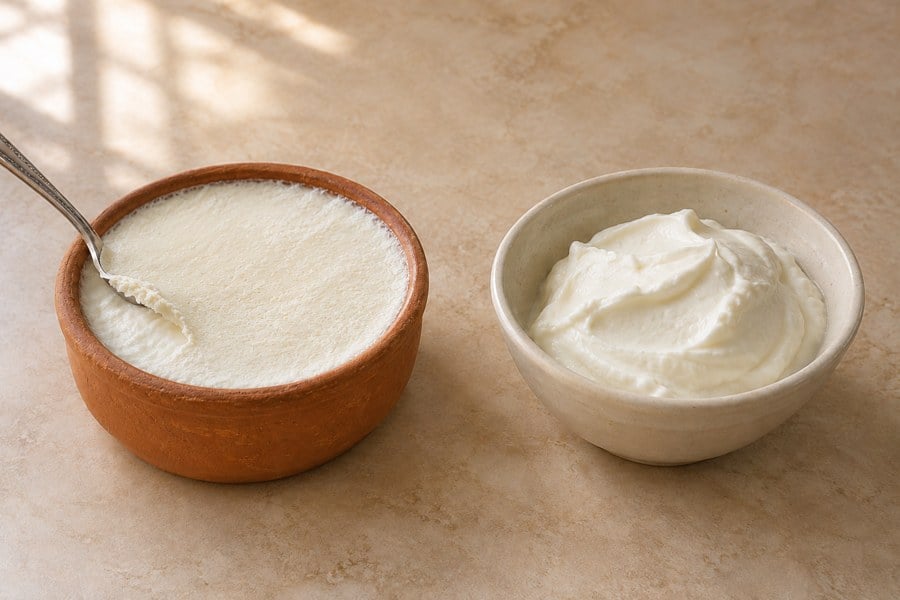
In set yogurt, fermentation takes place in the container in which the product will be offered to the consumer. Milk is filled as a liquid and fermented in that container; the resulting gel is cooled and kept as intact as possible during distribution. Yogurt made at home in pots or jars usually belongs to this group. One of its expected structural properties is to yield a neat piece when scooped with a spoon.
In stirred yogurt, fermentation is completed in a tank. The gel is broken up under controlled conditions, cooled and packaged. Its more fluid appearance results from this production method; a flowing consistency alone does not mean that it is low in protein or dry matter. Stirring intensity and pumping conditions have a considerable effect on final consistency.
Drinking yogurt is given a structure fluid enough to drink easily and may be plain or fruit-flavored. Ayran is also a fermented milk drink closely related to yogurt, but its water, salt and product definition distinguish it from drinking yogurts in general.
3.2. Regular and concentrated yogurts
In regular yogurt, the gel formed during fermentation is eaten together with its whey. In strained yogurt, part of this whey is removed, concentrating protein, fat and other retained components in a smaller amount of product and producing a thicker, spreadable, fuller texture. Traditional production uses cloth bags; industrial production can also use centrifugation and membrane processes.
Another way to obtain a thick texture is to concentrate milk before inoculation or enrich it with milk-derived proteins. Two equally thick products may therefore have been produced by different methods. Research by Özer and colleagues on concentrated yogurts also showed that the concentration method can change structure even at the same protein level. When assessing the names “strained,” “Greek” and “Greek-style,” both product composition and production method should be considered.
3.3. Cream-top and homogenized yogurts
Cream-top yogurt has a distinct fat-rich layer on its surface. In unhomogenized milk, fat globules rise over time because their density is lower than that of milk serum. The protein structure formed at the surface during heating and the loss of water also influence this layer. When milk fermented under suitable conditions retains this fat-rich surface, it gives the familiar cream-top yogurt.
Homogenization is the process of passing milk through a narrow gap under high pressure to break fat globules into smaller particles. Smaller globules rise more slowly, and milk fat becomes distributed more evenly, or homogeneously, throughout the product. The process takes its name from making that distribution uniform. Fat is consequently dispersed throughout the yogurt rather than accumulating only at the top.
The absence of cream on a homogenized yogurt therefore does not mean that all its fat has been removed. Even whole-milk yogurt may not develop a distinct cream layer when homogenized. Removing fat and distributing existing fat throughout the product are different operations. Homogenization does not lower fat content; it changes fat distribution and its contribution to structure.
3.4. Cow’s milk yogurt
Cow’s milk yogurt is among the varieties most commonly encountered both at home and in industry. Cow’s milk generally has lower protein and fat levels than sheep’s and buffalo’s milk. When made under the same conditions without adjusting dry matter, it may therefore produce a lighter, less dense texture. Appropriate heat treatment, culture and protein level can nevertheless produce a firm, smooth cow’s milk yogurt.
Its taste generally combines the familiar milk aroma with sourness produced by the culture. Its color can range from white to a slightly creamy shade, partly because of carotenoids in the milk fat. It is a valuable source of protein, calcium and phosphorus; energy and nutrient contents per serving vary according to whether it is made whole-milk, nonfat or strained.
3.5. Sheep’s milk yogurt
Sheep’s milk generally stands out for its high protein, fat and total dry matter contents. This composition favors a fuller, denser yogurt. High protein supports a stronger gel network, while fat gives a pronounced fullness in the mouth. It can therefore be easier to obtain thick yogurt from sheep’s milk without additional concentration.
Nutritionally, more protein and fat in the same weight of product can mean greater nutrient and energy density. Its aroma may be perceived as different and more pronounced than that of cow’s milk yogurt; feeding and the stage of lactation also influence its intensity.
3.6. Goat’s milk yogurt
Goat’s milk yogurt is often distinguished by its whiter appearance and characteristic aroma. The amounts of certain casein fractions, particularly αs1-casein, can vary widely with breed and genetics. These differences may cause the gel to develop differently from cow’s milk even at the same total protein level. Goat’s milk yogurt without dry matter adjustment can have a softer coagulum and a greater tendency toward whey separation.
Short- and medium-chain fatty acids in goat’s milk fat, and their release, contribute to its characteristic aroma. This aroma is not equally appealing to everyone; milk freshness and processing conditions also change its perceived intensity.
3.7. Buffalo’s milk yogurt
Buffalo’s milk is known for its high fat and dry matter contents, which favor a thick consistency and distinctly creamy mouthfeel. When the milk is not homogenized and surface conditions are suitable, the cream layer can also become prominent. This relationship between composition and structure largely explains why consumers describe buffalo’s milk yogurt as “fuller” or “denser.”
Its color is usually distinctly white, partly because the conversion of carotene into vitamin A differs from that in cow’s milk. High-fat buffalo’s milk yogurt may supply more energy than the same amount of a lower-fat cow’s milk yogurt. A product dense in protein and minerals can also be obtained.
3.8. Yogurts classified by fat content
Milk fat can be adjusted during yogurt production by removing some cream or adding cream. This produces whole-milk, reduced-fat and nonfat products. Because the legal limits for these categories differ between countries, looking at grams of fat per 100 grams on the packaging is more informative for a direct comparison.
3.9. Varieties classified by added ingredients and cultures
Plain yogurt is enjoyed for its characteristic milk and fermentation flavor. Adding fruit, flavorings or different milk ingredients, breaking down lactose and using special cultures allow varieties with different tastes, nutrient compositions and intended uses to be prepared.
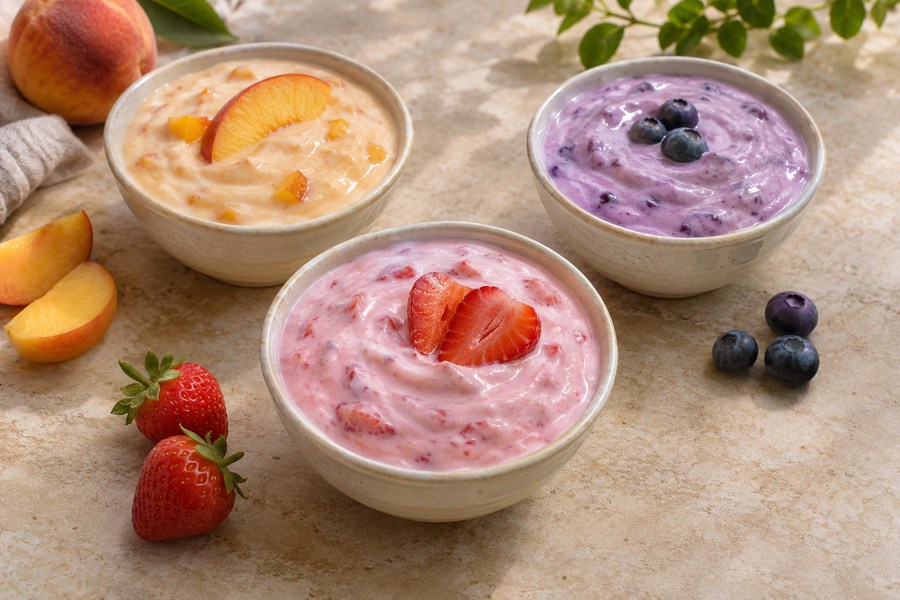
Fruits used in yogurt include strawberry, peach, apricot, banana, sour cherry, raspberry, blackberry, blueberry and mango. Mixed varieties, such as forest fruits or peach–apricot, can combine several fruits. Fruit contributes its own sugars, organic acids, pigments and aroma. The colors of red fruits such as strawberry and sour cherry, and those of blueberry, are largely associated with pigments called anthocyanins. Fruit type, ripeness and the amount added together determine yogurt’s taste and color.
In industrial production, fruit is usually added as a suitably heat-treated preparation containing purée, fruit pieces or a mixture, rather than directly as raw fruit. Depending on the product, this preparation may also contain sugar or other ingredients. Heat treatment reduces the yeasts and molds that fruit could carry into yogurt. The fruit can be stirred into fermented yogurt, placed at the bottom of a container before yogurt is filled over it, or presented in a separate compartment. Adding fresh fruit to plain yogurt when eating it at home is a practical way to choose the fruit quantity and any sweetener directly.
Flavored yogurts may use vanilla, coffee and various fruit flavorings. Ingredients such as cocoa, chocolate or coconut also create different flavors. Adding fruit itself and using an ingredient that gives its aroma do not affect composition in the same way. Fruit introduces pieces, fiber, organic acids and other fruit components; a flavoring is used mainly to create a desired aroma and taste profile. A fruit yogurt can therefore have a different composition from yogurt carrying the flavor of the same fruit.
Lactose-free yogurt is yogurt in which the milk sugar lactose has been broken down with lactase. Lactose consists of linked glucose and galactose units. Lactase, normally present in the small intestine, opens this bond so the two monosaccharides can be absorbed separately. In people with low lactase activity, undigested lactose reaches the large intestine, where its use by bacteria can cause gas, bloating and similar symptoms. In lactose-free yogurt, this breakdown is performed during production to make a product that is easier to consume for people who have difficulty digesting lactose.
Lactase may be added to milk before fermentation or together with the yogurt culture. While the enzyme splits lactose into glucose and galactose, the starter culture develops yogurt’s acidity, aroma and structure. Because glucose and galactose taste sweeter than lactose, lactose-free yogurt may taste sweeter even without added sugar. The carbohydrate is being split into smaller units rather than removed. Its nutritional value is therefore considered together with milk proteins, calcium and other milk components.
In high-protein yogurt, the aim is to provide more milk protein in the same amount of product. This can be achieved by straining away part of the whey, using membranes that retain proteins, or adding milk-protein ingredients. The result is a more protein-dense product, usually with a fuller texture. A higher protein content does not necessarily mean a higher fat content: high-protein yogurt can be made whole-milk, low-fat or nonfat.
In yogurts with added probiotic cultures, strains investigated for specific beneficial effects accompany the conventional yogurt bacteria. Selected strains of bacteria such as Lactobacillus acidophilus and Bifidobacterium animalis subsp. lactis can be used. A strain is a member of a bacterial species with particular characteristics; which strain is used and how well it remains alive in the product matter in product development. Special culture selection can also produce milder sourness, a different aroma or greater water retention. I will examine these culture-derived properties in detail in the microbiology and health benefits sections.
4. Nutritional Value of Yogurt
Yogurt is an exceptionally nutritious food that brings together high-quality milk proteins, calcium and phosphorus, B vitamins and live cultures. A bowl contributes substantial protein and minerals to the daily diet. During fermentation, some lactose is consumed, and small peptides and amino acids are released from proteins. We thus obtain milk’s valuable components in a fermented food that is easy to eat and readily digested.
4.1. How much does a bowl of yogurt contribute to daily intake?
The calculation below is for a 200-gram serving of the USDA plain whole-milk yogurt example used in the composition section. The comparison uses adult reference values for food labeling, allowing us to assess a serving’s contribution through the percentages we see on packaging.
| Energy or nutrient | Per 200 g of yogurt | Daily reference intake | Contribution |
|---|---|---|---|
| Energy | 155 kcal | 2000 kcal | 8% |
| Protein | 7.6 g | 50 g | 15% |
| Total fat | 9.0 g | 70 g | 13% |
| Carbohydrate | 11.1 g | 260 g | 4% |
| Calcium | 254 mg | 800 mg | 32% |
| Phosphorus | 202 mg | 700 mg | 29% |
| Potassium | 328 mg | 2000 mg | 16% |
| Magnesium | 22.9 mg | 375 mg | 6% |
| Zinc | 0.86 mg | 10 mg | 9% |
| Vitamin B2 | 0.49 mg | 1.4 mg | 35% |
| Vitamin B1 | 0.11 mg | 1.1 mg | 10% |
| Vitamin B6 | 0.09 mg | 1.4 mg | 6% |
Serving amounts were calculated from USDA FoodData Central record FDC 2259793; daily percentages have been rounded. Comparison values are the adult nutrition-labeling references in Annex XIII of Regulation 1169/2011.
A bowl makes a particularly large contribution to calcium, phosphorus and vitamin B2 intake. The serving above supplies approximately one-third of the daily calcium reference and more than one-third of the vitamin B2 reference. Its protein is also a meaningful contribution alongside meat, eggs, pulses and other dairy products in the daily diet.
4.2. The functions of proteins and minerals in the body
Yogurt’s milk proteins contain essential amino acids that the body cannot produce itself. These are used to build muscles, enzymes, proteins involved in immunity, and other tissues. Breaking some proteins into smaller fragments during fermentation contributes to the initial stages of digestion; enzymes in the stomach and small intestine then break them down into amino acids. Yogurt is consequently a readily digestible source of high-quality protein.
Calcium and phosphorus form part of bones and teeth. Calcium also contributes to muscle contraction and nerve transmission. Potassium and magnesium are important for muscle and nerve function and the mineral balance of cells. Vitamin B2 is used in enzyme systems that release energy from food; other B vitamins contribute to energy and amino acid metabolism. Yogurt’s nutritional value thus comes from providing these components together rather than simply being high in a single nutrient.
4.3. Nutritional value of regular, strained and fruit yogurt
Removing some water and whey concentrates the protein of strained yogurt into a smaller volume. In the high-protein Greek-style examples in the composition table, a 200-gram serving provides approximately 18–20 grams of protein, equivalent to about 36–40% of the 50-gram daily protein reference used on food labels. This makes strained yogurt a practical option for increasing protein intake.
Adding fruit introduces new flavors, fruit sugars, organic acids and phenolic compounds. Varieties with added sugar or fruit preparations have higher carbohydrate and energy contents. Combining plain yogurt with fresh fruit at home is another practical way to benefit both from yogurt’s proteins and minerals and from fruit’s distinctive components. The relevant table shows the detailed differences in composition among varieties.
5. Health Benefits of Yogurt
Yogurt’s health benefits arise from the milk-derived proteins, calcium and vitamins it provides together, the components formed during fermentation and the activity of its live cultures. These properties support digestion, the maintenance of bone and muscle tissue, and bowel function. Scientific research has investigated yogurt consumption in relation to improved lactose digestion, reduced digestive discomfort, more favorable metabolic indicators and support for immune function with particular cultures.
5.1. Helps digest lactose
There is an explanation for why some people who experience bloating, gas and abdominal discomfort after drinking milk can eat yogurt more comfortably. Yogurt bacteria produce β-galactosidase, an enzyme that breaks down lactose. Consumed with the live bacteria, it helps break down yogurt’s lactose in the intestine. The consumption of some lactose during fermentation also contributes to this effect.
Human research by Kolars and colleagues showed that lactose was better digested from yogurt than from milk. Other studies assessing breath hydrogen and digestive symptoms in people with difficulty digesting lactose supported this finding. EFSA’s assessment of live yogurt cultures likewise concluded that these cultures improve the digestion of lactose in yogurt. This is one of yogurt’s best-explained contributions to digestion.
5.2. Supports bone and dental health
Yogurt is a valuable food that supplies calcium and phosphorus together. These minerals are fundamental components of the mineral structure of bones and teeth. Yogurt proteins also contribute to maintaining the tissues that form bone’s organic structure. Its value for bone health therefore lies in bringing protein and minerals together in one food as well as in its calcium content.
In the example in the nutrition section, 200 grams of yogurt provides approximately 254 mg of calcium and 202 mg of phosphorus, corresponding to about 32% and 29% of the daily reference values used on food labels. These figures clearly show how significantly a bowl can contribute to daily mineral intake.
5.3. Contributes to muscle development and maintenance of muscle mass
Yogurt proteins supply essential amino acids used to build muscle proteins. While regular yogurt contributes to daily protein intake, high-protein strained varieties provide more protein in a smaller volume. This makes yogurt practical for people who exercise and those seeking to increase their daily protein intake.
In a study published by Bridge and colleagues in 2019, 30 young men completed a 12-week resistance and plyometric exercise program. One group received high-protein, nonfat Greek-style yogurt; the other received a carbohydrate-based pudding supplying the same energy. Mean fat-free mass increased by 2.4 kg in the yogurt group and 1.3 kg in the comparison group. Improvements in muscle thickness and total strength were also greater in the yogurt group. These results show that protein-rich yogurt can support muscle development alongside exercise.
5.4. Provides cultures that support bowel function and digestive comfort
Live bacteria in yogurt and metabolites formed during fermentation interact with the intestinal environment. Bacterial lactic acid production, digestive enzymes and cell components contribute to this interaction. Some yogurts also contain added probiotic strains studied for benefits to bowel function.
In a double-blind, controlled study by Guyonnet and colleagues evaluating data from 197 women reporting mild digestive discomfort, participants consumed 125 grams of a fermented milk product twice daily for four weeks. The product contained Bifidobacterium animalis subsp. lactis DN-173 010 and yogurt cultures. The proportion reporting improved digestive well-being was higher in this group than in the comparison group consuming a nonfermented dairy product. A composite digestive symptom score and the measure of digestive comfort also improved more in the fermented-product group.
5.5. Is associated with favorable outcomes for type 2 diabetes
Large human studies have also examined yogurt consumption in relation to long-term health. In a study published by Chen and colleagues in 2014, the diet and health of approximately 194,000 adults in three large US cohorts were followed. An additional daily serving of yogurt was associated with an approximately 17% lower risk of developing type 2 diabetes.
The pooled analysis of 14 prospective studies assessed in the same research found a similar association between one daily serving of yogurt and lower type 2 diabetes risk. These findings indicate that we should consider yogurt as a whole fermented dairy food, rather than assessing its place in the daily diet solely through calories.
5.6. Positive effects on immune and inflammatory indicators have been reported
Human studies have examined the relationship between yogurt cultures and the immune system. In two intervention studies in older adults, Makino and colleagues assessed regular consumption of yogurt made with L. delbrueckii subsp. bulgaricus OLL1073R-1 alongside increased natural killer cell activity. These cells are part of the body’s innate defense system. The combined analysis reported lower odds of catching a common cold in the yogurt-consuming group.
In a randomized controlled study of 120 women, Pei and colleagues investigated nine weeks of yogurt consumption and the effects of eating yogurt before a meal. The yogurt groups had a lower IL-6 response and lower values for certain endotoxin-related indicators after a standard meal than the comparison group. IL-6 is a molecule used to assess inflammation; the research provides an example of yogurt’s favorable effects on post-meal metabolic and inflammatory responses.
Considered together, these benefits make yogurt an exceptionally nutritious, healthy food: easy to eat, a significant contributor to daily protein and mineral intake, and further enriched by live cultures and fermentation products. Eating plain yogurt with meals, having it as a snack or combining it with fruit are practical ways to include it regularly in the daily diet.
6. Microbiology of Yogurt
Bacteria that acidify milk and give yogurt its distinctive properties are at the center of production. The two basic members of the conventional yogurt culture are Streptococcus thermophilus and Lactobacillus delbrueckii subsp. bulgaricus. Fermentation speed, sourness, aroma and consistency are closely related to the selected strains of these bacteria. For detailed information on starter cultures, see Starter Cultures; Definition, Types and Characteristics.
6.1. How do the two yogurt bacteria support each other’s growth?
Using these bacteria together creates a partnership based on the exchange of nutrients. L. bulgaricus breaks milk caseins into small peptides with proteinases on its cell surface. Amino acids released from the peptides provide a nitrogen source for S. thermophilus, whose independent capacity to break down protein is more limited. The streptococcus consequently grows faster and produces lactic acid from lactose more rapidly.
S. thermophilus contributes formic acid or formate, carbon dioxide and, in some strains, growth factors such as folate. Formate and carbon dioxide in particular support metabolic requirements that L. bulgaricus can use to build cell components and multiply. Oxygen consumption by the streptococcus also helps create conditions favorable to their joint growth.
This exchange means that, in many suitable culture combinations, milk acidifies faster with both cultures than with either alone. Streptococcal growth becomes prominent initially; as peptides and other growth factors accumulate, lactobacillus activity strengthens. The acid they produce together forms the protein network, while acetaldehyde and other aroma compounds develop the characteristic yogurt aroma. Culture selection therefore determines both how quickly milk sets and the taste and consistency obtained.
This is where strain selection matters. Two strains of the same species can differ in their ability to break down protein, produce acid or generate aroma. Selecting cultures that support one another well helps control production time and obtain the desired flavor and structure more consistently. For the general characteristics of lactic acid bacteria, see Lactic Acid Bacteria; Definition, Classification and Characteristics.
6.2. How are bacterial counts and culture dosage calculated?
In industry, culture dosage is determined from viable bacterial counts and milk-acidifying activity. Consider an example targeting an initial 10⁷, or approximately ten million, CFU per gram of each yogurt bacterium. This dosage calculation aims to start each bacterium at sufficient numbers and provide conditions suitable for multiplication during fermentation.
If one gram of the liquid starter contains 10⁹ CFU of each species, adding 1 kg of starter to 99 kg of milk gives a 100 kg mixture containing approximately 10⁷ CFU/g of each species initially. The bacteria multiply during incubation, so final counts rise above this starting level. The combined initial count of the two species in this example is approximately 2 × 10⁷ CFU/g.
For concentrated frozen or freeze-dried cultures added directly to milk, dosage is adjusted using activity units specified by the culture manufacturer. Cultures differ in viable cell density and acid production rate. Both the initial dosage and the viable count reached at the end of fermentation are monitored; yogurt bacteria can reach hundreds of millions per gram at this stage.
6.3. EPS, yogurt consistency and health research
Some yogurt bacteria produce long carbohydrate chains outside their cells, called exopolysaccharides, or EPS. Strains producing EPS that increase water retention and viscosity receive particular attention in culture selection. Together with the protein network, these chains help hold water, reduce whey separation and give yogurt a fuller mouthfeel.
A string-like stretch beneath the spoon when yogurt is lifted may result from EPS production by the starter. Stretchiness or thickness therefore does not always mean that a thickener has been added. Certain yogurt bacteria can produce this property and are used for that purpose in industry.
EPS are also studied in relation to health. In an experimental intestinal inflammation model in rats, Şengül and colleagues compared the high-EPS-producing L. bulgaricus B3 culture with the lower-producing A13 culture. Both groups showed increases in enzymes related to antioxidant defense and reduced oxidative damage to lipids; improvement was more pronounced with the high-EPS-producing culture.
Research published by Xiong and colleagues in 2023 examined EPS-1, a polysaccharide isolated from yogurt fermented with the two conventional yogurt bacteria. In mice with experimentally induced colitis, EPS-1 administration reduced damage to the intestinal surface and barrier, lowered inflammatory indicators and produced changes in short-chain fatty acids and gut microbiota. These studies help explain how polysaccharides produced by yogurt bacteria can interact with the intestinal environment.
Human studies of OLL1073R-1 yogurt also investigated the relationship between specific EPS-producing cultures and immune function. I described their findings in the health benefits section. The biological interest of bacterial products that also alter yogurt consistency adds to the importance of culture selection. For more information on EPS, see Exopolysaccharides; Definition, Characteristics and Health Benefits.
6.4. How does yogurt spoil?
Yogurt’s acidic environment limits the growth of many bacteria. Some yeasts and molds, however, can grow under acidic conditions and are therefore the most common microbial causes of yogurt spoilage. They reach the product particularly after heat treatment, from equipment, air, packaging, fruit preparations or a spoon during use.
Yeasts able to use carbohydrates can produce gas and alcohol. Swollen packaging, bubbles in yogurt and an unusual yeasty or alcoholic smell are signs of this activity. Molds grow on surfaces exposed to oxygen, forming white, green, blue or other-colored colonies. The product should not be consumed in this condition.
Increasing sourness is a different process. Post-acidification occurs when yogurt bacteria continue producing lactic acid during storage, even slowly. Excessive sourness and whey separation may develop; the main cause is the normal yogurt culture remaining active longer than expected. Warm storage accelerates this change.
Bacteriophages are another production problem. Phages are viruses that enter bacteria and multiply inside them. When they attack starter bacteria, fermentation can slow or stop, and milk fails to acidify in the expected time. Industry therefore combines culture rotation, equipment cleaning and control of the production environment. For milk’s initial microbial composition, see Microorganisms Found in Raw Milk; Types, Effects and Importance.
7. Chemistry of Yogurt
Yogurt formation begins with bacteria using the carbohydrate in milk and ends with proteins establishing a new structure. Acid, protein, minerals, water and aroma components change together. Following these changes helps us understand why milk sets, why yogurt becomes sour and why it sometimes releases whey.
7.1. How does milk become yogurt?
Yogurt is a dairy product made by acidifying milk. In practice, four basic approaches are used to coagulate milk proteins: acid, enzymes, heat and combinations of these methods. Turkish white cheese, for example, is made by coagulating milk through the enzymes in rennet. Heat is used particularly to coagulate whey proteins; making lor cheese by heating or combining heat and acid is an example. In yogurt, acid is the main agent forming the coagulum.
That acid is lactic acid. The bacteria added as yogurt starter use lactose, milk’s carbohydrate, through lactic acid fermentation and produce lactic acid. As it gradually accumulates, the pH falls. With increasing acidity, milk proteins begin to interact, eventually forming a water-holding network that coagulates the milk. Milk’s transformation from a liquid into yogurt’s gel structure is therefore the result of this microbial biochemical process.
7.2. From lactose to lactic acid; why does acidity increase?
Fresh milk generally has a pH of 6.6–6.8. After yogurt bacteria are added, they begin multiplying and then produce lactic acid using lactose. β-Galactosidase splits lactose into glucose and galactose. Carbohydrates used by the bacteria pass through the steps of glycolysis to form pyruvate, which lactate dehydrogenase converts into lactic acid. The bacteria obtain energy to live and multiply in the process.
As lactic acid accumulates in milk, acidity rises and pH falls. These are linked consequences of the same fermentation: bacteria consume lactose and produce lactic acid, the accumulated acid acidifies the medium, and the proteins respond by forming a coagulum.
At around pH 4.8–4.6, the distinct, cohesive coagulum expected of yogurt has developed. Its earliest microscopic connections can begin forming sooner, around pH 5.3, in strongly heat-treated yogurt milk. As acidification progresses, connections increase and milk becomes a continuous gel that can be scooped. Approximately pH 4.6, casein’s isoelectric pH, is an important point at which repulsion between proteins is greatly reduced and the acid coagulum becomes pronounced.
7.3. How do casein micelles form a protein network?
Caseins occur in milk as small particles called micelles. Their surface charges and outward-extending protein regions help keep them apart at normal milk pH. As acidity increases, electrical repulsion decreases; colloidal calcium phosphate dissolves from the micelles into the serum phase, changing their internal organization.
New interactions develop between protein particles as they approach one another. When these connections extend throughout the milk, they create a three-dimensional network. Water, lactose and soluble minerals occupy its spaces, with fat globules within or around the structure. This explains why yogurt does not flow like liquid milk despite its high water content.
A higher protein content provides more material for network formation, so milk high in dry matter, particularly protein, can yield fuller yogurt. How the particles connect also matters: heat treatment, the culture’s acid production rate, temperature and mechanical movement determine network firmness and water retention.
7.4. How do heat treatment and denaturation strengthen structure?
Proteins are amino acid chains folded into a particular arrangement. Denaturation is the unfolding and rearrangement of this natural three-dimensional structure under an influence such as heat. Think of a ball of string loosening and opening in places: regions previously tucked inside become available to interact with other molecules.
Whey proteins in particular undergo this change when yogurt milk is heated. Exposed regions of β-lactoglobulin form links with κ-casein on the surface of casein micelles and with other whey proteins. These include disulfide bonds and hydrophobic interactions. When the heated milk is inoculated, these protein associations also participate in forming the acid gel.
The result is a stronger coagulum, better water retention and less whey separation. This is an important reason why yogurt milk receives a more intensive heat treatment than drinking milk. The controlled temperature and holding time determine the extent of whey protein denaturation and final consistency.
7.5. Acetaldehyde; a principal component of characteristic yogurt aroma
While lactic acid creates yogurt’s sour taste, acetaldehyde is one of the main components of its characteristic aroma. This small, volatile molecule is important in developing the distinctive fresh fermentation aroma we smell. Culture selection therefore considers the ability to produce acetaldehyde as well as the speed of acid formation.
Acetaldehyde can arise from bacterial pyruvate metabolism and the use of certain amino acids. Splitting threonine into acetaldehyde and glycine is one important route in yogurt bacteria. Both conventional yogurt bacteria contribute to aroma; their joint growth and nutrient exchange can also enhance acetaldehyde production.
Gezginç and colleagues examined 91 S. thermophilus and 35 L. bulgaricus strains isolated from traditional Turkish yogurts and demonstrated differences in their lactic acid and acetaldehyde production. This helps explain why two starters carrying the same species names can make differently flavored yogurts. Production temperature, milk composition and the timing of cooling also change the final aroma.
Other carbonyl compounds, including diacetyl and acetoin, contribute to the overall aroma. Diacetyl gives a more buttery note, while acetaldehyde brings out the typical yogurt character. Changes in these compounds during storage explain why a yogurt several days old does not smell identical to freshly fermented yogurt.
7.6. What do pH and titratable acidity tell us?
pH indicates the effective hydrogen ion activity in a medium. A lower number means greater acidity. A fall from pH 6.7 to 4.7, for example, means hydrogen ion activity has increased approximately one hundredfold. Monitoring pH in yogurt production shows how close the proteins are to gel formation and when cooling should begin.
Titratable acidity measures how much alkali is required to neutralize a specified quantity of yogurt. The result is usually expressed as a percentage of lactic acid equivalent. This measurement includes the acid load together with the capacity of proteins and minerals to bind acid, known as buffering.
Comparing regular and high-protein yogurts illustrates the difference. Proteins and phosphates bind some hydrogen ions released when acid is added. More acid may therefore need to form to bring a high-protein milk to the same pH. Two yogurts can both have pH 4.6 while the higher-protein one has greater titratable acidity. Producers use pH to monitor coagulum formation and titratable acidity to follow acid development and the taste profile. For details, see Acidity of Milk; Importance, Effects and Determination Methods.
7.7. Why does yogurt release whey and become thinner when stirred?
As the protein network rearranges and contracts over time, it releases some retained serum. This is called syneresis. Low protein, insufficient heat treatment, excessively rapid or prolonged acidification, moving the container during coagulation and excessive mechanical treatment all increase whey separation.
Breaking set yogurt with a spoon or stirrer divides the continuous network into small gel particles. These move more readily, increasing fluidity. Stirred yogurt production applies this operation under controlled conditions to obtain a smooth texture. Very vigorous stirring or unsuitable pumping can make particles excessively small and weaken serum retention. Protein content, appropriate heating and EPS-producing cultures that improve water retention help preserve the structure.
7.8. The importance of temperature in yogurt production
Heating milk for yogurt has three important functions:
1. Killing microorganisms: Controlling disease-causing microorganisms accomplishes an important step in producing wholesome, safe yogurt. At the same time, it reduces microorganisms that could compete with the added starter culture and creates a suitable environment for its growth.
2. Binding whey proteins to casein micelles: Whey proteins unfolded by heat “stick,” in everyday terms, to casein micelles. This interaction is extremely important for forming a yogurt coagulum with the desired firmness and water-holding capacity.
3. Evaporating some water from milk: Removing water increases dry matter and helps obtain the firm texture often described in Turkish as “yogurt as solid as a rock.” Water is lost during open-vessel heating at home; industry uses controlled evaporation in systems called evaporators. I will discuss industrial evaporation and water loss during home heating separately in the production sections.
The heat treatment of yogurt milk is therefore extremely important both for hygiene and for the desired consistency. It may consequently be longer than the pasteurization treatment used for drinking milk. Dairy scientists even have a saying: “As much as milk destined for cheese dislikes heat, milk destined for yogurt loves it.”
7.9. Why consider final pH, cooling and container size together?
A final pH of approximately 4.2 is targeted for a conventional yogurt with pronounced sourness and a developed aroma. To obtain this flavor, acid development, incubation and cooling are planned together. In set yogurt especially, incubation is ended at around pH 4.6–4.8 according to container size and cooling conditions; acid production continuing until the product is fully cooled in a cold room or refrigerator is included in the final pH calculation. The container here means retail packaging in industrial production and a pot, jar or other fermentation vessel at home.
A small yogurt container and a large vessel holding several kilograms do not cool at the same rate. The small container has a higher surface-area-to-volume ratio, and heat travels a shorter distance from its center. The middle of a large vessel stays warm longer even after its surroundings have cooled. Small containers may therefore begin cooling at about pH 4.6, while large ones may require earlier cooling at a higher pH, around 4.7–4.8.
Bacterial activity does not stop instantly when yogurt is refrigerated. The yogurt is still warm, particularly at its center, and remains for a while at or near temperatures suitable for fermentation. The bacteria continue consuming lactose and producing lactic acid. As acid accumulates, acidity rises and pH falls. Souring therefore continues between placing the container in the refrigerator and every part of the yogurt reaching refrigerator temperature.
Once the product cools to approximately 4°C, yogurt bacterial enzymes work much more slowly; nutrient use, multiplication and acid production decrease markedly. The bacteria remain alive but less active, so the fall in pH also slows considerably. Some additional souring over days of refrigerated storage reflects this continuing low-rate activity.
The aim is to account for acid produced during cooling and obtain the desired flavor at a final pH around 4.2. Container volume, milk quantity, container arrangement, cold-air circulation and cooling capacity are therefore assessed together. The culture’s acid production rate is part of the calculation too. Production monitors how the yogurt’s core temperature and pH change over time, as well as the room or refrigerator temperature.
In stirred yogurt, the same issue arises while emptying the tank. The first portion is cooled immediately, while the last remains warm longer. Cooler and pump capacities are therefore chosen so the tank empties within a reasonable time, reducing taste and consistency differences between the first and last filled packages.
7.10. Yogurt quality, shelf life and storage
Good yogurt has a characteristic, clean milk and fermentation aroma, a balanced sour taste and a consistency appropriate to its variety. Set yogurt should have a smooth, cohesive coagulum; stirred yogurt should be smooth and homogeneous. The desired consistencies of sheep’s milk, buffalo’s milk, strained and drinking yogurts differ.
The accumulation of a small amount of yellowish-greenish whey on yogurt’s surface is called syneresis. This liquid is serum released by the protein network and contains lactose, soluble minerals and some milk protein. Surface whey can be stirred back into yogurt with a normal appearance and smell and consumed. Using the whey in soups and doughs is also common.
Clean production, intact packaging and uninterrupted refrigeration together determine shelf life. University extension guides give approximately 10–21 days for hygienically prepared plain homemade yogurt stored around 4°C. Conventional yogurt produced on hygienic industrial lines can achieve 21–30 days in unopened packaging. Dividing homemade yogurt among small containers, opening only the one needed each time and using a clean spoon help preserve this quality.
| Product and storage conditions | Time under good conditions |
|---|---|
| Plain homemade yogurt; clean, covered container, approximately 4°C | Approximately 10–21 days |
| Hygienic industrial production; unopened packaging, approximately 4°C | Approximately 21–30 days |
These ranges apply to products kept properly chilled from production onward. In warm conditions, bacteria continue producing acid, sourness rises rapidly and whey separation becomes more pronounced. Yeast and mold contamination also shorten shelf life. Surface mold, unusual discoloration, a yeasty smell or gas-swollen packaging indicate spoilage.
Some misconceptions and rumors about industrial yogurt also deserve attention here. The ideas that “a long shelf life must mean added preservatives” or “slow souring means no live culture” are mistaken. In a factory, milk is heated under controlled conditions, clean equipment is used, yogurt is filled into sealed packaging that reduces external contamination, and the product is kept cold. This is the main explanation for its long life. Strains that produce acid more slowly in the cold can also be selected. They remain alive in yogurt but work less in the refrigerator, so it sours more slowly. Rumors attributing long shelf life or slow souring solely to additives are therefore unfounded. For my detailed discussion, see Store-Bought Yogurt: 7 Questions Answered by a Food Scientist.
8. Industrial Yogurt Production
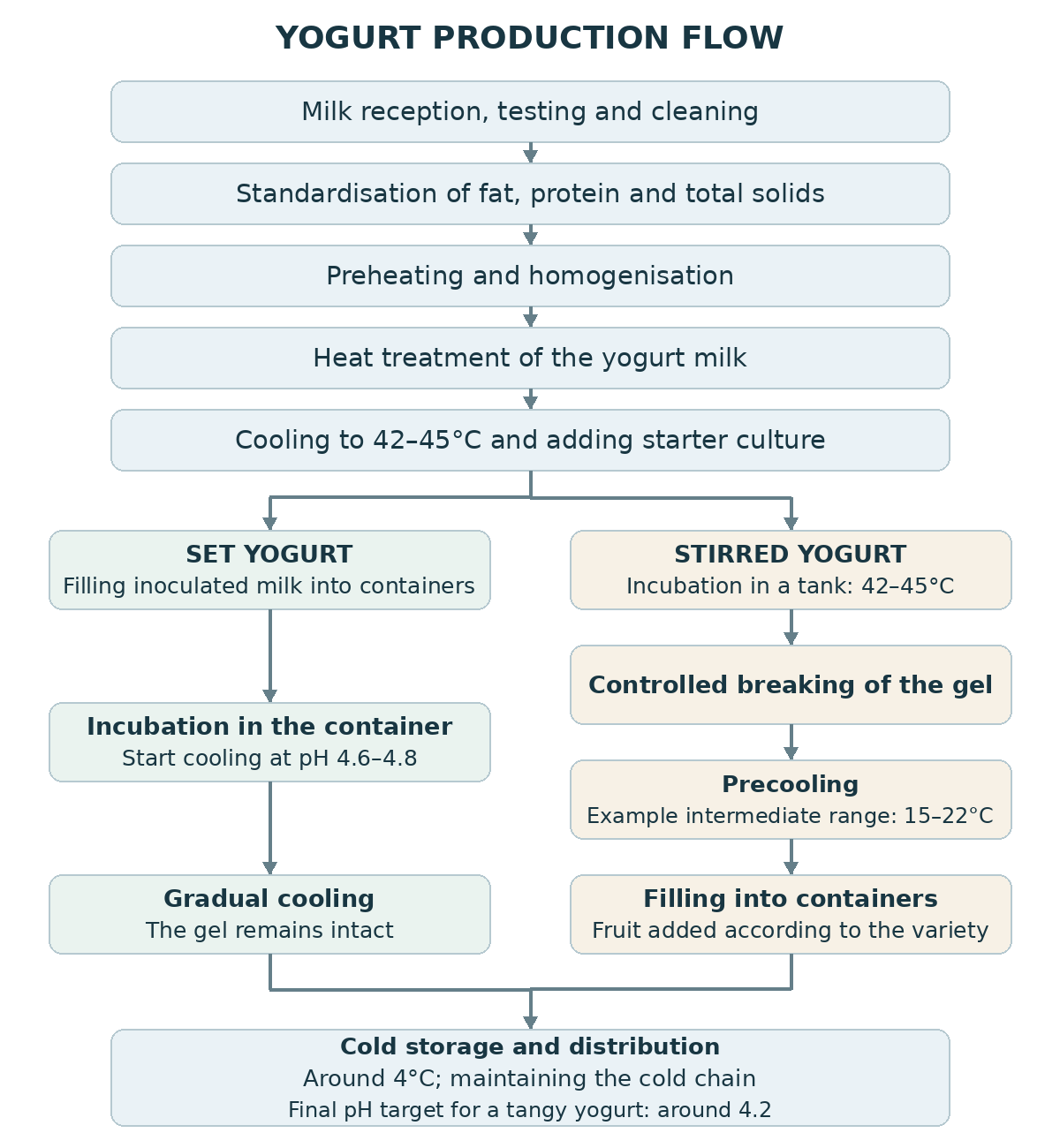
Industrial production aims to control milk properties and yogurt bacterial activity so that each batch has a similar taste, consistency and nutrient composition. The operations complement one another: extending fermentation alone cannot produce a good structure if protein is insufficient, and incorrect cooling can make yogurt excessively sour even after suitable heating. Production therefore follows the complete flow below.
8.1. Production flow for set and stirred yogurt
In set yogurt, inoculated milk is first packaged and the coagulum forms inside the package. In stirred yogurt, it forms in a tank before being broken up under controlled conditions, cooled and packaged. The main differences are where fermentation occurs and how the resulting gel is handled.
8.2. Milk reception, clarification and composition adjustment
Incoming milk is assessed for temperature, appearance, smell, acidity, fat and protein. Rapid antibiotic-residue tests are especially important because a residue that suppresses bacteria may also inhibit the yogurt culture. Microbiological quality and obtaining milk from healthy animals are also part of raw-material acceptance. Suitable milk is filtered or passed through centrifugal cleaning equipment called clarifiers, which remove physical impurities separable by density differences.
Standardization follows. This means adjusting components such as fat and protein to levels specified for the intended product. Fat is adjusted by removing cream or adding an appropriate amount. Protein and nonfat solids can be increased with milk-derived ingredients or concentrated by removing some water. Seasonal and raw-material variations consequently do not translate directly into changes in final consistency.
Evaporation is a major industrial method of removing water. Milk is usually held under vacuum in an evaporator; reduced pressure makes water boil off at a lower temperature. The aim is to control water loss and increasing solids rather than boil all the milk in an open vat for a long time. For example, 100 kg of milk at 12% dry matter contains 12 kg of dry matter. Removing only water to reach 15% dry matter leaves a final mass of 80 kg, with approximately 20 kg of water removed. This calculation illustrates the principle.
Membrane processes such as ultrafiltration can concentrate proteins in particular. Milk passes across a membrane through which some small components can pass while proteins are largely retained. Evaporation and membrane processing affect composition differently: one mainly removes water, while the other removes water together with small components able to cross the membrane.

8.3. Homogenization and heat treatment
Homogenization is a high-pressure process that divides milk fat into small droplets and distributes them evenly throughout the milk. One example in yogurt production is homogenization at approximately 65–70°C and 200–250 bar. The droplets’ surface area increases, and milk proteins occupy their surfaces, helping fat become incorporated into the future protein network. Less cream accumulates at the top, and the structure becomes more homogeneous. Cream-top yogurt uses a different processing arrangement that allows fat to collect at the surface.
Two heat-treatment arrangements for yogurt milk are approximately 85°C for 20–30 minutes or 90–95°C for about 5 minutes. Holding time starts once the milk reaches the target temperature. Heating reduces pathogenic microorganisms and those competing with the culture, while denaturing whey proteins to prepare them for gel formation. Producers select a temperature–time combination suited to the equipment’s heat transfer and milk composition.
Treatment in a closed heat exchanger does not cause as much water loss as an open saucepan at home. Water loss needed to increase industrial solids is provided separately at the evaporation stage, if used. Heating and concentration can thus be controlled independently.
8.4. Cooling to inoculation temperature and adding culture
Heated milk is cooled to a temperature suitable for the selected culture, usually 42–45°C. Starter is then added and distributed evenly throughout. Plants may use a propagated liquid culture or concentrated frozen or freeze-dried cultures prepared for direct addition to production milk. Known as DVS or DVI cultures, these are added directly to the production tank.
Dosage is assessed through viable bacterial counts and acidifying activity as well as grams. Two equal-weight cultures can have different activities. Directly added concentrates therefore follow the activity units and dosage specified by their manufacturer. The microbiology section explains an example based on the two yogurt bacterial counts.
8.5. Filling, incubation and cooling in set yogurt
Inoculated milk is filled into clean, suitable packages, which are transferred to an incubation room maintained at fermentation temperature. Incubation means holding the product at a suitable temperature for bacteria to multiply and produce acid. The cohesive coagulum that can be scooped intact forms in the container in which the yogurt will be sold. Shaking and movement are avoided as it develops.
Fermentation does not end simply according to the clock. Acid development, pH and coagulum condition are monitored together. For the final target of approximately pH 4.2 explained in the chemistry section, cooling may start around pH 4.6 in small packages and pH 4.7–4.8 in large, slower-cooling ones. The range is adjusted by considering the culture and cooling system together. Since a large container’s center cools more slowly, bacteria there keep producing acid for a time, and pH continues falling during cooling.
Cooling usually proceeds in stages: first out of the temperature range in which cultures work rapidly, then down to refrigerator temperature. Air circulation around packages, avoiding tightly packed crates and adequate room cooling capacity help cool the inside sufficiently quickly. During chilled resting, the structure firms up and the yogurt is prepared for transport and sale.
8.6. Tank fermentation, gel breaking and filling in stirred yogurt
Stirred yogurt is fermented in a large tank rather than its retail packaging. The bacteria similarly use lactose to produce acid, turning the milk into a gel. Fermentation may end at approximately pH 4.2–4.5 according to the target sourness. The coagulum is then broken up under controlled conditions with a slow stirrer and an appropriate pumping arrangement.
The aim is a smooth texture that can be scooped yet still flows. The product may pass through a cooler to reach approximately 15–22°C initially. This intermediate temperature slows acid development while maintaining suitable flow for filling. Cooling continues after filling, and the product goes into cold storage. Pump type, pipe diameter, flow rate and stirring intensity determine the mechanical treatment of the coagulum and directly affect consistency.
In fruit varieties, a suitably prepared, heat-treated fruit preparation can be mixed into the yogurt at this stage. Some products place fruit at the bottom or in a separate compartment. Fruit preparation is also part of hygiene and composition control. After filling, sealing and cold storage, the product reaches consumers through the cold chain.
8.7. Cleaning the production line and protecting the product
Cleaning tanks, pipes, valves and filling machinery goes beyond removing visible dirt after production. Because milk residues and surface-attached microorganisms can carry over into the next batch, the line is cleaned with a clean-in-place, or CIP, system that circulates suitable cleaning solutions. Rinsing and disinfection are also verified. Preventing recontamination of heated milk and finished yogurt is fundamental to preserving shelf life.
9. Making Yogurt at Home
Three things need control for good homemade yogurt: preparing the milk to form yogurt, using a live, active starter and maintaining a suitable temperature throughout fermentation. Pot size, milk composition and room temperature may differ between batches. Understanding what these stages accomplish, rather than seeing the process simply as “warming the milk and covering it,” markedly improves the result.
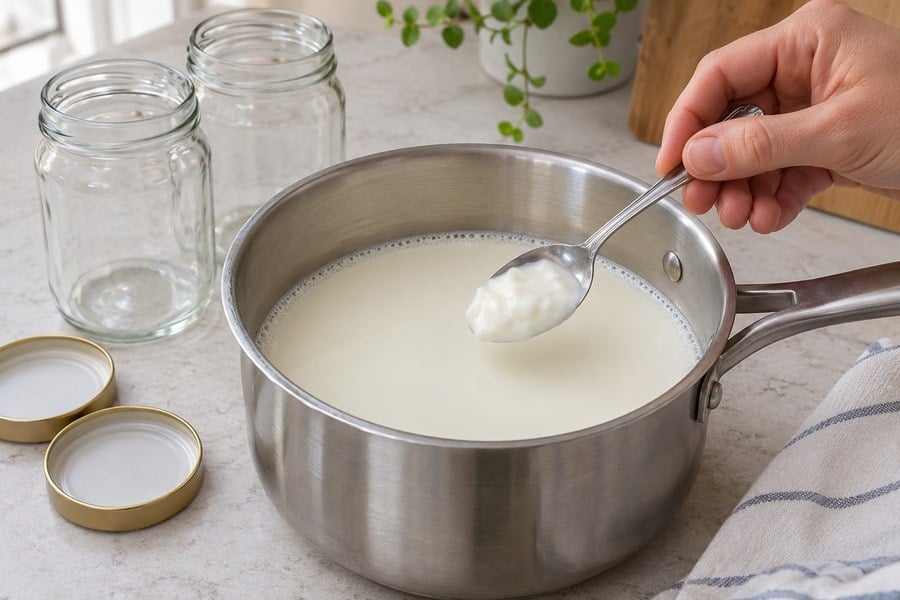
9.1. Preparing milk, starter and containers
Yogurt can be made with pasteurized or UHT milk. If using raw milk, it should come from healthy animals under suitable milking and cooling conditions and receive sufficient heat treatment before inoculation at home. Cow’s milk gives a familiar texture, while the higher protein and fat in sheep’s or buffalo’s milk can yield a denser yogurt. The chosen milk’s properties are the starting point for final consistency.
Starter can be freshly made plain yogurt containing live cultures or a culture prepared specifically for yogurt making. When saving some of the previous yogurt, choose a clean portion that has not become excessively sour. Very old yogurt, yogurt repeatedly opened and dipped into, or yogurt left outside for a long time does not provide a suitable starting point.
Wash and rinse the pot, spoon, thermometer and fermentation containers thoroughly; small heat-resistant containers can be prepared using boiling water. Small containers cool more uniformly and avoid repeatedly exposing the entire batch during consumption.
9.2. Heating milk; preparing consistency begins here
When working with raw milk, controlled heating to approximately 85–90°C and holding within that range for 20–30 minutes is an approach suitable for yogurt making. Use low heat, a suitable pot and gentle stirring to prevent scorching. Sufficient heating both reduces microorganisms and unfolds whey proteins so they can participate in the yogurt network.
With pasteurized or UHT milk, bringing it briefly to the boil once or twice and then cooling to inoculation temperature is another home method. Additional heating helps prepare proteins for yogurt structure, especially in pasteurized milk. UHT milk has already experienced high temperatures; reheating and the limited water loss from an open pot mainly contribute to the desired dry matter and consistency. These milks can thus also produce well-structured, thick yogurt.
Some water evaporates during open-pot heating, concentrating the milk because the same protein and fat remain in less water. A wider pot surface accelerates water loss. Reach the desired concentration while preventing boiling over or scorching, rather than prolonging boiling without control.
9.3. Cooling to 42–45°C and adding starter
Cool the heated milk to 42–45°C for inoculation. This range is extremely important for the joint growth of conventional yogurt bacteria. Measure with a thermometer; finger-based assessment varies between people. Since the surface and center of a large pot may differ in temperature, stir gently before measuring. Placing the pot in an external cold-water bath can accelerate cooling.
With a live, active yogurt starter, approximately 20 grams of yogurt per liter of milk, or about 2%, can be used as an initial approach. Loosen the starter with a little warm milk in a small bowl, then add it to the main milk and distribute evenly. For a prepared concentrated starter, follow the amount recommended on the packet; equating its weight with the same weight of homemade yogurt does not give a correct dosage.
Milk that is too hot may damage the starter bacteria; milk that is too cool slows growth and acid production. More starter does not always make firmer yogurt: acidity may rise too quickly, causing excessive sourness and whey separation. An appropriate dose of active starter works together with stable temperature.
9.4. Incubation; maintaining temperature and waiting for the coagulum
Home incubation requires an area or appliance that maintains a constant temperature. This may be a yogurt maker, a temperature-controlled water bath or a suitable oven. Containers can, for example, be incubated in an oven with a yogurt setting or one that reliably maintains a selected temperature within 42–45°C. Monitor actual temperature with a thermometer, because the display and the area holding the containers can differ.
The milk must be brought to 42–45°C initially, and the selected temperature in that range should remain as constant as possible throughout incubation. Continual cooling, reheating or marked fluctuations change the balance between the two bacteria, acid production rate and aroma development. Such conditions cannot consistently deliver the desired taste and structure. One successful batch does not guarantee the same result next time; a controlled environment provides this repeatability.
Even yogurt incubated at 42°C can taste different from yogurt incubated at 45°C. The two bacteria respond differently to temperature; changing it alters their relative growth rates, acid formation and aroma production. With some cultures, the same holding time at a higher temperature leads to faster acidification and more pronounced sourness. A lower temperature may slow the process. Holding time and the starter must therefore be considered alongside temperature to understand the final taste.
An active culture may form a coagulum in approximately 4–7 hours. Look for a distinct consistency throughout the container, no free flow like milk, and a clean yogurt aroma. Repeatedly moving containers, stirring or shaking to check them can disturb the newly forming protein network. Once the coagulum has formed, leaving yogurt warm all night to make it thicker usually brings more sourness and whey separation.
9.5. Cooling and resting
Once set, remove yogurt from the incubation environment and begin cooling. As explained earlier, acid production continues after refrigeration until the center cools; the timing of cooling must account for this ongoing activity. Small containers can be refrigerated without shaking the coagulum. They cool more quickly at the center and impose a smaller heat load on the refrigerator. Leave spaces for cold air to circulate between them.
Resting overnight at approximately 4°C lets the yogurt cool and its structure firm up. This explains why newly set warm yogurt and yogurt rested in the cold until the next day have different consistencies. Leaving it unstirred helps preserve the set structure. For details on milk selection, see Raw milk, Pasteurized milk or UHT milk?.
9.6. Why does yogurt fail to set or develop a weak structure?
1. An old or weak starter may contain too few live, active bacteria. Insufficient acid then forms, and milk does not coagulate in the expected time. Starting the next batch with fresh plain yogurt containing live cultures or a suitable starter helps determine whether the starter was responsible.
2. Milk temperature must be assessed separately. Adding starter to overly hot milk can damage bacteria. Even with a suitable starting temperature, rapid cooling during incubation slows activity. Measure with a thermometer both when adding starter and throughout incubation. Correcting the temperature-maintaining arrangement for the next batch is more effective than leaving an unset batch outside for an indefinite time because of low temperature.
3. Antibiotic residues in raw milk can suppress fermentation. If an animal has been treated and the milk withdrawal period has not been observed, residual medication may prevent yogurt bacteria from multiplying. Boiling does not reliably resolve this residue problem. If suspected, discuss it with the supplier and use suitable raw material.
4. Mastitis, inflammation of the udder, also changes milk composition. Alterations in casein structure, mineral balance and milk enzymes can contribute to a weaker coagulum and whey separation.
5. Low fat or protein, insufficient heat treatment and movement during coagulum development can also produce loose yogurt.
A failure to set therefore does not always have the same cause: milk that has not acidified at all must be distinguished from yogurt that has acidified but formed a weak gel.
A batch whose fermentation takes much longer than expected or that develops a bad smell, discoloration or gas should neither be consumed nor used as starter. Beginning the next batch with fresh milk, a new culture, clean equipment and measured temperature prevents the previous problem from carrying over.
9.7. What changes when saving starter from the previous yogurt?
Saving starter from the same yogurt each time does not always preserve the balance between the two bacteria. One may lose more viability than the other during storage; excessive souring, other microorganisms entering from outside or bacterial phages can change how the next starter works. Slower setting, greater sourness or a changed smell after several batches can be signs.
Once the new yogurt has cooled and rested, remove a small starter portion with a clean spoon before repeatedly opening it for eating. Keep this portion refrigerated in a clean, covered container. Switch to a new culture when activity falls noticeably or taste and structure begin deteriorating. This increases the chance of carrying good yogurt characteristics into the next batch.
9.8. How to prepare strained yogurt at home
Prepare a clean strainer, a clean food-grade straining cloth and a deep bowl. Line the strainer with the cloth and add yogurt, then set it over the bowl high enough that separated whey cannot touch the yogurt again. Cover the arrangement and place the whole setup in the refrigerator to drain. Check after a few hours according to the desired consistency; longer straining removes more whey and makes yogurt denser.
Refrigeration has two benefits: it slows yogurt bacterial activity that would increase sourness in a warm environment and limits the growth of microorganisms introduced during straining. Yogurt thus retains its clean taste better as it concentrates. Properly chilled separated whey can be used in soups or doughs.
10. Yogurt Standards and Legal Composition in Different Countries
Yogurt is more than a product named according to the taste and consistency we expect. Legislation defines the conditions under which a food may be sold as “yogurt,” its required cultures, composition limits and other permitted ingredients. National rules have both similarities and differences.
10.1. The international reference; Codex Alimentarius
The CXS 243-2003 Standard for Fermented Milks, part of the joint FAO and World Health Organization food standards system, defines conventional yogurt culture as the combination of S. thermophilus and L. delbrueckii subsp. bulgaricus. It specifies at least 2.7% milk protein, at least 0.6% titratable acidity expressed as lactic acid, and a total of at least 10⁷ CFU/g of characteristic starter microorganisms. The live-culture requirement is maintained until the end of shelf life under specified storage conditions. Products heat-treated after fermentation are addressed separately.
Codex is an international reference rather than national legislation automatically applied identically everywhere. The law of the country in which the product is sold must also be considered. The following comparison shows how these differences affect composition and naming.
10.2. Türkiye; protein, fat, cultures and permitted ingredients
The principal regulation in Türkiye is the Turkish Food Codex Communiqué on Fermented Milk Products, No. 2022/44, read together with amendment No. 2024/1. Both characteristic yogurt bacteria must be used, with a total count of at least 10⁷ CFU/g at the end of shelf life. Additional starter or adjunct cultures may be used and are declared on the label.
| Yogurt characteristic in Türkiye | Legal limit or category |
|---|---|
| Milk protein in yogurt | At least 3.0% |
| Milk protein in strained yogurt | At least 8.0% |
| Titratable acidity of yogurt | 0.6–1.5% expressed as lactic acid |
| Total characteristic starter microorganisms | At least 10⁷ CFU/g |
| Full-fat yogurt | At least 3.8% milk fat |
| Half-fat yogurt | At least 1.5%, but less than 2% milk fat |
| Nonfat yogurt | No more than 0.5% milk fat |
| Yogurt outside these fat categories | Named according to its fat percentage |
Percentages by mass; Communiqué 2022/44, Annexes 1 and 2. CFU means colony-forming unit, used in viable microorganism counts. 10⁷ CFU/g means ten million colony-forming units per gram.
Plain yogurt cannot use other proteins to replace milk protein or vegetable fat to replace milk fat; starch and gelatin cannot be added. Separate permissions apply to starch or gelatin in flavored products and products heat-treated after fermentation. Vegetable fat occurring naturally in a flavoring food is considered separately. Alcohol, alcohol-based ingredients and dairy flavorings such as sheep’s milk, goat’s milk or butter flavor are prohibited; enzymes other than lactase cannot be used.
Fat and protein percentages appear on the front label; cream formation and homogenization are stated with the product name. Animal species are declared when mixed milks are used. The general minimum fruit content is 6%; 2% applies to the high-acidity and tropical fruits defined in the Communiqué.
The 2024 amendment sets a maximum total specific microorganism count of 10² CFU/g for products heat-treated after fermentation. Such products are not classified under the same name as conventional yogurt meeting the live-culture requirement. Flavored yogurt, flavored strained yogurt and fermented milk products heat-treated after fermentation are also offered in packages of no more than 500 grams.
10.3. United States; composition and other permitted ingredients
The US standard in 21 CFR 131.200 requires the same two characteristic bacteria. Milk ingredients are pasteurized or ultra-pasteurized before culture addition. The main standard specifies at least 3.25% milk fat and 8.25% milk solids-not-fat. Lower-fat varieties have separate naming and composition provisions. Final product pH, measured within 24 hours after filling, must be 4.6 or below.
The standard permits sweeteners, flavoring ingredients, colors, stabilizers, emulsifiers and preservatives where safe and suitable. Türkiye’s ingredient rules for plain yogurt therefore cannot be generalized to all US yogurts. Ingredients used are declared on the label.
Products may be heat-treated after fermentation to inactivate microorganisms; the label must then state that they do not contain live and active cultures. “Contains live and active cultures” may be used where there are at least 10⁷ CFU/g at manufacture and a reasonable expectation of at least 10⁶ CFU/g throughout shelf life.
10.4. United Kingdom; legal naming and industry guidance
In the United Kingdom, yogurt/yoghurt falls within the legal framework protecting dairy designations. Using nondairy fat or protein to replace milk constituents wholly or partly does not conform to the dairy basis of this designation. Adding ingredients such as fruit, cereals or flavorings is considered separately from substituting for milk constituents.
Voluntary industry guidance prepared by Dairy UK and the Provision Trade Federation is also used for yogurt composition. It recommends at least 2.9% milk protein before other ingredients are added. This 2.9% is a recommendation in that guidance. Its culture definition includes L. bulgaricus and/or S. thermophilus, and other suitable bacteria may also be used. Suitable microorganisms should be alive and abundant in live-culture products; heat treatment after fermentation should be identified in the name of that variety.
The same guidance defines natural yogurt as a plain product without added sugars, colors or other additives. Other varieties may contain legally permitted stabilizers, thickeners and other additives. Permission depends on the relevant food category and amount as well as the additive appearing on an approved list. Since the frameworks for applying additive legislation differ between Great Britain and Northern Ireland, permissions are assessed for the relevant territory.
A low-fat nutrition claim requires no more than 3 g fat per 100 g for spoonable products, or 1.5 g per 100 mL for liquid products. A fat-free claim requires no more than 0.5 g per 100 g or 100 mL. These are conditions for nutrition claims rather than categories imposing a single fat content on every yogurt variety.
10.5. France; conditions for the name yaourt
French Decree 88-1203 reserves yaourt/yoghourt for products made with L. bulgaricus and S. thermophilus added together. These bacteria must be alive at sale to consumers, with a combined count of at least ten million per gram in the milk portion. Free lactic acid must be at least 0.7 g/100 g, and protein in the milk portion must not be lower than in normal milk.
Nondairy fats and proteins cannot replace milk fat or protein. Sugar and other foods giving a particular taste may be added up to a combined 30% of the final product. Processes removing milk components, particularly straining the coagulum, are also specifically restricted. Strained fermented milk products from other countries therefore cannot automatically be equated with this French legal definition.
10.6. Spain; plain, fruit and post-fermentation pasteurized yogurt
Spain’s Real Decreto 271/2014 attributes yogurt coagulation to the joint activity of the two characteristic cultures. Live-culture products must have at least 10⁷ CFU/g or mL in the milk portion, a maximum pH of 4.6 and at least 8.5% nonfat solids. The general minimum fat content is 2% in the milk portion; semi-skimmed varieties contain more than 0.5% and less than 2%, and skimmed varieties no more than 0.5%.
Enrichment of plain yogurt with milk powder and certain milk-derived ingredients is permitted within limits. Gelatin and the relevant starches are allowed under this national standard only for fruit or flavored varieties under specified conditions; gelatin, for example, has a maximum of 3 g/kg. In varieties containing fruit and other foods, at least 70% of the final product must be yogurt; for flavored varieties, the minimum is 80%.
Yogurt pasteurized after fermentation is defined as a separate variety whose name identifies the treatment, allowing consumers to distinguish live-culture yogurt from subsequently heat-treated products through the label.
This comparison is based on official texts examined on November 16, 2026, and the separately identified industry guidance: Codex CXS 243-2003; Türkiye 2022/44 and 2024/1; US 21 CFR 131.200; UK legislation on dairy designations and nutrition claims and the Dairy UK/PTF guidance; French Décret 88-1203; and Spanish Real Decreto 271/2014. Alongside product definitions, the relevant general rules on food additives, hygiene, contaminants and labeling also apply.
11. Yogurt Production and Consumption Worldwide
Yogurt is now produced in large quantities across Europe, Asia, the Americas and Africa and consumed in many forms. Alongside plain yogurt, the development of fruit, drinking, strained and high-protein varieties has given it a broad range of uses, from breakfast and main meals to snacks and desserts.
11.1. World yogurt production
The European Union and China are two major centers of fermented milk production, a category that includes yogurt. Annual production also reaches millions of tonnes in the United States, Russia and Japan. Production figures compiled by CNIEL from International Dairy Federation data are presented below alongside TurkStat figures for Türkiye.
Production of yogurt and other fermented milk products in selected countries and regions, 2024.
| Country or region | Production (thousand tonnes) |
|---|---|
| European Union, 27 countries | 9,738 |
| China | 6,073 |
| Germany¹ | 3,250 |
| Russia | 2,830 |
| United States² | 2,213 |
| France | 1,363 |
| Türkiye⁴ | 1,330 |
| Japan | 1,071 |
| Mexico³ | 770 |
| United Kingdom | 519 |
| South Africa² | 502 |
| Argentina² | 345 |
| Egypt | 319 |
| Chile | 229 |
Source: CNIEL, L’économie laitière en chiffres, 2026 (FIL/IDF); Türkiye: TurkStat, Milk and Milk Products, December 2025. ¹ Includes milk drinks and desserts. ² Yogurt only. ³ Estimate. ⁴ Yogurt production in integrated dairy enterprises only; excludes home production. Quantities are rounded to the nearest thousand tonnes. Other rows cover fermented milk products. Germany and France are included in the EU total.
Production trends differ between countries. In the same series, EU fermented milk production rose by approximately 4.9% between 2020 and 2024, while China’s fell by approximately 26.4%.
More recent data tracking yogurt alone show growth in the United States and Türkiye. According to the US Department of Agriculture, the United States produced approximately 2.40 million tonnes of yogurt in 2025, up 8.5% from the previous year. This covers plain and flavored yogurt and excludes frozen yogurt.
In the integrated dairy enterprises covered by TurkStat, Türkiye’s yogurt production increased from 1,329,587 tonnes in 2024 to 1,402,485 tonnes in 2025, a rise of 5.5%. The total includes plain, strained and flavored yogurt. Homemade yogurt is outside this industrial production total.
11.2. Yogurt consumption by country
Yogurt’s importance in daily diets varies between countries, both in the amount consumed and the types preferred. Plain yogurt has a large share in some markets, while fruit, drinking or higher-protein products attract more interest in others.
Provisional German figures for 2025 put annual per-capita consumption of plain and flavored yogurt products at 14.9 kilograms, including 7.3 kilograms of plain yogurt, or approximately half of consumption. Plain yogurt consumption was 5.6 kilograms in 2015, indicating that this variety strengthened its position over the last decade.
In France, yogurt purchases for home consumption through major retail channels increased from 791,774 tonnes in 2024 to 820,028 tonnes in 2025, approximately 3.6% growth.
Spain’s Ministry of Agriculture, Fisheries and Food household data for 2025 report yogurt purchases of 426.45 million kilograms, or 9.10 kilograms per person annually. This represents purchases for consumption at home.
In the United States, yogurt available for consumption per person increased from approximately 2.95 kilograms in 2000 to 6.57 kilograms in 2024, about 2.2 times the earlier amount. Total domestic use rose from approximately 2.23 million tonnes in 2024 to 2.43 million tonnes in 2025, an annual increase of 8.6%. This USDA calculation represents available consumption derived from items such as production and foreign trade.
In Japan, J-Milk’s per-capita fermented milk consumption, calculated from production and population data, rose from approximately 6.55 liters in fiscal 2000 to 10.44 liters in fiscal 2025. This category includes spoonable and drinking yogurt.
One comprehensive study illustrating yogurt’s place in Türkiye’s daily diet is the Ministry of Health’s Türkiye Nutrition and Health Survey. The 2017 survey found average daily yogurt consumption of 112.7 grams among people aged 15 and over, equivalent to approximately 41.1 kilograms annually. This result comes directly from a dietary consumption survey and reflects eating habits including homemade yogurt.
11.3. Consumption habits and prominent yogurt varieties
Yogurt’s adaptability to different meals and eating habits plays an important role in its growing markets. In Türkiye, plain yogurt accompanies meals and is used in cacık, soups, sauces and many dishes. Breakfast consumption with fruit, cereals and nuts forms an important part of daily yogurt use in other markets.
In a Great Britain in-home consumption study covering the 52 weeks ending February 23, 2025, 33% of yogurt eating occasions occurred at breakfast and 28% at the evening meal. More than three-quarters of breakfast occasions included cereals, fruit or nuts alongside yogurt. At dinner, eating it as dessert was prominent. The same product consequently performs different roles at different tables.
Plain yogurt and products emphasizing protein content are two groups attracting recent attention. AHDB’s Great Britain figures show that in the 12 weeks ending September 5, 2026, sales volumes of standard plain yogurt rose 18.4% and yogurt drinks 7.4% against the same period a year earlier. A separate analysis reported 8.0% volume growth in cow’s milk yogurts carrying protein claims in the 12 weeks ending August 8, 2026.
This demand also affects production methods. Protein can be increased through straining, membrane filtration or enrichment with milk proteins. Drinking yogurts offer products suited to different consumption settings through their flowing texture and single-serving packaging. Alongside milk and culture selection, producers thus design protein content, consistency, taste and packaging for the eating habits they aim to serve.
References
Özer, B. (2006). Yoğurt Bilimi ve Teknolojisi. Sidas Yayınları.
Aryana, K. J., & Olson, D. W. (2017). A 100-Year Review: Yogurt and other cultured dairy products. Journal of Dairy Science, 100(12), 9987–10013.
Özer, B. H., Stenning, R., Grandison, A. S., & Robinson, R. K. (1999). Effect of protein concentration on the properties and structure of concentrated yogurts. International Journal of Dairy Technology, 52(4), 135–138.
Codex Alimentarius Commission. (2024). Standard for Fermented Milks (CXS 243-2003). Version incorporating the 2024 amendments.
University of Guelph. (n.d.). Dairy Science and Technology eBook: Cultured Dairy Products and Cheese. University of Guelph.
Tetra Pak. (2025). Dairy Processing Handbook. Tetra Pak.
USDA Agricultural Research Service. (2022). FoodData Central, Foundation Foods: Yogurt, plain, whole milk. FDC 2259793.
EFSA Panel on Dietetic Products, Nutrition and Allergies. (2010). Scientific Opinion on the substantiation of health claims related to live yoghurt cultures and improved lactose digestion. EFSA Journal, 8(10), 1763. Version incorporating the 2011 correction.
Smith, D. K. (2015). Yogurt Made Simple. Washington State University Extension, FS173E.
ISAPP. (2025). Do all fermented foods contain a probiotic?
The American Heritage Dictionary of the English Language. (n.d.). Yogurt. The American Heritage Dictionary of the English Language.
Académie française. (n.d.). Yaourt. Dictionnaire de l’Académie française (9th edition).
Real Academia Española & Asociación de Academias de la Lengua Española. (n.d.). Yogur. Diccionario de la lengua española.
TÜİK. (2026). Süt ve Süt Ürünleri Üretimi, Aralık 2025. Haber Bülteni No. 53967, February 13, 2026.
USDA National Agricultural Statistics Service. (2026). Dairy Products 2025 Summary. April 2026, pp. 11, 44.
Ministerio de Agricultura, Pesca y Alimentación. (2026). La leche mes a mes: Diciembre 2025. Panel de Consumo Alimentario.
Tolu, A., & Altun, İ. (2022). Comparison of homemade and commercial yoghurt in Van province, Turkey. Food Science and Technology, 42, e08321.
Encu, Ş. B., Acar Soykut, E., & Çakır, İ. (2022). Geleneksel yoğurtlardan izole edilen laktik asit bakterilerinin MALDI TOF MS biotyper sistemi ile tanımlanması ve bazı starter kültür özelliklerinin belirlenmesi. Gıda, 47(6), 1059–1082.
Terzioğlu, M. E., Bakırcı, İ., Öz, E., Brennan, C. S., Huppertz, T., Amarowicz, R., Khan, M. R., Elobeid, T., Aadil, R. M., & Öz, F. (2023). Comparison of camel, buffalo, cow, goat, and sheep yoghurts in terms of various physicochemical, biochemical, textural and rheological properties. International Dairy Journal, 146, 105749.
Demirhan, Ş. Ş., Andiç, S., & Oğuz, Ş. (2026). Comparison of Physicochemical, Microbiological, and Sensory Properties of Yogurt Made From Cow, Goat, Sheep, and Buffalo Milk with and Without Probiotic Cultures. Food Science & Nutrition.
Boukria, O., El Hadrami, E. M., Sameen, A., Sahar, A., Khan, S., Safarov, J., Sultanova, S., Leriche, F., & Aït-Kaddour, A. (2020). Biochemical, Physicochemical and Sensory Properties of Yoghurts Made from Mixing Milks of Different Mammalian Species. Foods, 9(11), 1722.
Food and Agriculture Organization of the United Nations. (n.d.). Milk composition. Gateway to Dairy Production and Products.
Fisberg, M., & Machado, R. (2015). History of yogurt and current patterns of consumption. Nutrition Reviews, 73(Suppl. 1), 4–7.
Küçükkömürler, S., Şeren Karakuş, S., & Şirvan Boran, N. (n.d.). Türk Kültüründe Yoğurt. Kültür ve Turizm Bakanlığı elektronik yayın arşivi.
USDA Agricultural Research Service. (2019). FoodData Central, SR Legacy: Yogurt, plain, low fat. FDC 170886.
USDA Agricultural Research Service. (2019). FoodData Central, SR Legacy: Yogurt, plain, skim milk. FDC 170887.
USDA Agricultural Research Service. (2019). FoodData Central, SR Legacy: Yogurt, Greek, plain, whole milk. FDC 171304.
USDA Agricultural Research Service. (2019). FoodData Central, SR Legacy: Yogurt, Greek, plain, nonfat. FDC 170894.
Ullah, R., Khan, S., Ali, H., Bilal, M., & Saleem, M. (2017). Identification of cow and buffalo milk based on Beta carotene and vitamin-A concentration using fluorescence spectroscopy. PLOS ONE, 12(5), e0178055.
Jankowska, A., Wachowska, M., Dąbrowska, A., Bielecka, M., Warechowski, J., & Potaś, A. (2026). Evaluation of the Fermentation Profiles and Quality Attributes of Yogurts Made from Cow, Goat, and Mixed Milk. Foods, 15(2), 314.
Tarakçı, Z., & Küçüköner, E. (2003). Physical, Chemical, Microbiological and Sensory Characteristics of Some Fruit-Flavored Yoghurt. Yüzüncü Yıl Üniversitesi Veteriner Fakültesi Dergisi, 14(2), 10–14.
Kolars, J. C., Levitt, M. D., Aouji, M., & Savaiano, D. A. (1984). Yogurt—an autodigesting source of lactose. New England Journal of Medicine, 310, 1–3.
Chen, M., Sun, Q., Giovannucci, E., Mozaffarian, D., Manson, J. E., Willett, W. C., & Hu, F. B. (2014). Dairy consumption and risk of type 2 diabetes: 3 cohorts of US adults and an updated meta-analysis. BMC Medicine, 12, 215.
Bridge, A., Brown, J., Snider, H., Nasato, M., Ward, W. E., Roy, B. D., & Josse, A. R. (2019). Greek Yogurt and 12 Weeks of Exercise Training on Strength, Muscle Thickness and Body Composition in Lean, Untrained, University-Aged Males. Frontiers in Nutrition, 6, 55.
Guyonnet, D., Schlumberger, A., Mhamdi, L., Jakob, S., & Chassany, O. (2009). Fermented milk containing Bifidobacterium lactis DN-173 010 improves gastrointestinal well-being and digestive symptoms in women reporting minor digestive symptoms: a randomised, double-blind, parallel, controlled study. British Journal of Nutrition, 102(11), 1654–1662.
Makino, S., Ikegami, S., Kume, A., Horiuchi, H., Sasaki, H., & Orii, N. (2010). Reducing the risk of infection in the elderly by dietary intake of yoghurt fermented with Lactobacillus delbrueckii ssp. bulgaricus OLL1073R-1. British Journal of Nutrition, 104(7), 998–1006.
Pei, R., DiMarco, D. M., Putt, K. K., Martin, D. A., Chitchumroonchokchai, C., Bruno, R. S., & Bolling, B. W. (2018). Premeal Low-Fat Yogurt Consumption Reduces Postprandial Inflammation and Markers of Endotoxin Exposure in Healthy Premenopausal Women in a Randomized Controlled Trial. Journal of Nutrition, 148(6), 910–916.
Şengül, N., Işık, S., Aslım, B., Uçar, G., & Demirbağ, A. E. (2011). The effect of exopolysaccharide-producing probiotic strains on gut oxidative damage in experimental colitis. Digestive Diseases and Sciences, 56(3), 707–714.
Xiong, J., Yu, J.-J., Liu, D.-M., Wu, J.-J., Liang, M.-H., Tang, J., & Xu, Y.-Q. (2023). A polysaccharide from yogurt fermented by Lactobacillus bulgaricus and Streptococcus thermophilus: Structural characteristics and its alleviative effect on DSS-induced colitis in mice. Journal of Functional Foods, 109, 105778.
Gezginç, Y., Topcal, F., Çömertpay, S., & Akyol, İ. (2015). Quantitative analysis of the lactic acid and acetaldehyde produced by Streptococcus thermophilus and Lactobacillus bulgaricus strains isolated from traditional Turkish yogurts using HPLC. Journal of Dairy Science, 98(3), 1426–1434.
Garofalo, G., Ponte, M., Busetta, G., Tolone, M., Bonanno, A., Portolano, B., Gaglio, R., Erten, H., Sardina, M. T., & Settanni, L. (2023). A Thorough Investigation of the Microbiological, Physicochemical, and Sensory Properties of Ewe’s Yoghurt Fermented by a Selected Multi-Strain Starter Culture. Foods, 12(18), 3454.
Bilgucu, E., Ivanov, G. Y., Balabanova, T. B., & Ivanova, I. V. (2021). Comparative study on the quality characteristics of yoghurt produced by caw milks with different somatic cells count. Bulgarian Journal of Agricultural Science, 27(2), 385–390.
University of Alaska Fairbanks Cooperative Extension Service. (2024). Making Yogurt at Home. FNH-00062. Reviewed October 2024.
European Parliament and Council. (2011). Regulation (EU) No 1169/2011, Annex XIII: Reference intakes; consolidated version.
Tarım ve Orman Bakanlığı. (2022). Türk Gıda Kodeksi Fermente Süt Ürünleri Tebliği, Tebliğ No: 2022/44. Resmî Gazete, November 30, 2022, 32029.
Tarım ve Orman Bakanlığı. (2022). Fermente Süt Ürünleri Tebliği, Ek-1 ve Ek-2: Yağ oranları ve ürün özellikleri.
Tarım ve Orman Bakanlığı. (2024). Fermente Süt Ürünleri Tebliğinde Değişiklik, Tebliğ No: 2024/1. Resmî Gazete, February 10, 2024, 32456.
U.S. Food and Drug Administration. (n.d.). 21 CFR 131.200: Yogurt. Electronic Code of Federal Regulations; text reviewed on November 16, 2026.
République française. (n.d.). Décret n° 88-1203 du 30 décembre 1988 relatif aux laits fermentés et au yaourt ou yoghourt; yürürlükteki birleştirilmiş metin.
Gobierno de España. (2014). Real Decreto 271/2014, de 11 de abril, por el que se aprueba la Norma de Calidad para el yogur o yoghourt; birleştirilmiş metin.
Millî Eğitim Bakanlığı. (2016). Gıda Teknolojisi: Fermente Süt Ürünleri Üretimi. Millî Eğitim Bakanlığı, pp. 55–56.
Dairy UK & Provision Trade Federation. (2015). Code of Practice for the Composition and Labelling of Yogurt. Updated November 2015.
Food Standards Agency. (2026). Food allergen labelling and information requirements technical guidance. Updated November 3, 2026.
Food Standards Agency. (2026). Approved additives and E numbers.
UK Government. (n.d.). Nutrition and health claims: guidance to compliance with Regulation (EC) 1924/2006.
Dekker, P. J. T., Koenders, D., & Bruins, M. J. (2019). Lactose-Free Dairy Products: Market Developments, Production, Nutrition and Health Benefits. Nutrients, 11(3), 551.
Ścibisz, I., Ziarno, M., & Mitek, M. (2019). Color stability of fruit yogurt during storage. Journal of Food Science and Technology, 56(4), 1997–2009.
CNIEL. (2026). L’économie laitière en chiffres: Édition 2026. FIL/IDF production data, pp. 177; CIRCANA purchase data, pp. 111.
USDA Economic Research Service. (2025). Dairy products: Per capita consumption, United States (Annual). Dairy Data, Updated December 16, 2025.
USDA Economic Research Service. (2026). Selected soft dairy products, domestic use (Annual). Dairy Data, Updated August 27, 2026.
Landesvereinigung der Milchwirtschaft Nordrhein-Westfalen. (2026). Deutschland: Pro-Kopf-Verbrauch von Milchprodukten. Mitteilungen und Marktberichte, Nr. 20/26, May 13, 2026. Data source: ZMB.
J-Milk. (2026). Yıllara göre kişi başına içme sütü ve diğer süt ürünleri tüketimi. Dataset 3080300, Updated June 23, 2026.
T.C. Sağlık Bakanlığı. (n.d.). Türkiye Beslenme ve Sağlık Araştırması 2017: Özet Bulgular.
Agriculture and Horticulture Development Board. (2025). Premium products boost demand for cheese and yogurt. November 4, 2025.
Agriculture and Horticulture Development Board. (2026). Q3 2026 dairy market review.
Agriculture and Horticulture Development Board. (2026). Protein power: The trend winning over consumers.

Halil İbrahim Akgül
Halil Ibrahim Akgul, Ph.D., is an Assistant Professor of Food Engineering at Bayburt University, where he works in the Division of Food Sciences within the Faculty of Engineering. He received his B.Sc. in Food Engineering from Akdeniz University in 2010, followed by an M.Sc. and a Ph.D. in Food Engineering from Atatürk University in 2015 and 2020, respectively. His formally recognised academic fields are Food Sciences and Engineering, Food Technologies, Dairy and Dairy Products Technology, and Food Microbiology.
Dr. Akgul has more than fifteen years of professional, research, and academic experience in food science. Between 2011 and 2013, he worked as the food engineer responsible for operations at the Pilot Dairy and Bread Factory of Atatürk University’s Directorate of Agricultural Enterprises. This industrial experience, combined with his subsequent academic research, gave him extensive practical and scientific knowledge of milk processing, dairy production, food quality, hygiene, and product development.
His research is primarily focused on milk and dairy products, dairy microbiology, starter cultures, lactic acid bacteria, exopolysaccharides, butter technology, and the physicochemical, microbiological, sensory, and nutritional properties of foods. His studies have examined the quality and fatty-acid composition of traditional butter, aroma formation in butter produced with different starter cultures, raw-milk quality, the characterisation and antioxidant activity of bacterial exopolysaccharides, traditional dairy products such as çökelek and karın kaymağı, colostrum powder, and the use of fruit-derived ingredients in ice cream production.
His academic record includes peer-reviewed research articles published in national and international journals, including Mljekarstvo, Acta Scientiarum Technology, the Journal of Food Safety and Food Quality, the International Journal of Food Engineering, the Atatürk University Journal of Agricultural Faculty, and ATA Food Journal. Four of the research articles currently listed in his university profile were published in SCI-Expanded-indexed journals. He has also contributed to twelve national and international conference papers and presentations covering dairy products, food microbiology, butter quality, fatty-acid composition, starter cultures, exopolysaccharide-producing bacteria, colostrum, traditional foods, and functional ice-cream formulations.
Dr. Akgul has participated as a researcher or adviser in eleven completed scientific and applied research projects. These projects have addressed the modernisation of pilot dairy-processing facilities; the production and quality characteristics of colostrum powder; the physicochemical and microbiological quality of butter and raw milk; the identification of exopolysaccharide-producing lactic acid bacteria; the development and production optimisation of starter cultures for mould-ripened cheese; the standardisation of traditional dairy products; and the use of sloe berry and persimmon fibre in ice-cream production.
His teaching experience spans undergraduate, associate-degree, and graduate education. The courses he has taught include Food Chemistry, Analytical Chemistry, General Chemistry, Organic Chemistry, Fermented Dairy Products Technology, Butter Production and Processing Technology, Healthy Living and Nutrition, Organic Agriculture and Food, Popular Science, Digital Literacy, and Information Technologies. Through these courses, he combines fundamental food chemistry and engineering principles with dairy technology, nutrition, scientific literacy, and the practical communication of scientific knowledge.
He is the founder and Editor-in-Chief of Gıda ve Sağlık, a multilingual digital publication devoted to food, nutrition, health, food chemistry, food microbiology, and culinary science. Through this platform, he draws upon his academic background, teaching experience, research activity, and practical knowledge of food production to present scientifically grounded information in a detailed and accessible form for an international readership.