
Jujube has a history of approximately 4000 years. Its scientific name is Ziziphus jujuba Mill. It is also known as the Chinese date or red date, and in China it is called the “fruit of life” or “fruit of immortality.”
This article consists of two parts. The first part of the article provides general information about the jujube plant. The second part, which is located further down, provides information about the health benefits and composition of the jujube fruit.

Jujube, known to belong to the Rhamnaceae family, is a temperate climate plant that can grow widely in tropical and subtropical climates. Its homeland is East Asia, especially China.
The jujube tree can grow up to 8 to 10 meters and sheds its leaves in winter. Its flowers bloom between April and May and are yellow and have a pleasant scent.
Jujube tree, which is reported to be suitable for temperate climatic conditions, can be cultivated in gardens and it is also reported that there are wild species in natural environments. The Jujube tree is a tree that is generally resistant to cold weather conditions. However, if it encounters cold weather during the flowering period, it suffers extreme damage from frost.
Jujube tree has no soil selectivity except in very heavy soils. It can grow in acidic or slightly basic (pH 5-7.5) soils. It is resistant to drought as well as cold weather conditions. However, to grow productive fruit trees, choosing sandy, permeable, and moist soils with sufficient humus content is recommended.
Jujube tree does not require excessive care, as with delicate fruits. Although this plant does not require much water, it is known to prefer soil rich in lime.
Jujube is generally propagated from seed and grown by grafting onto seedlings. Raising plants from seed can be laborious, so potted grafted nursery plants are another option. Many studies have examined in vitro propagation, while research on propagation from cuttings is limited. The plant also grows wild as part of the natural vegetation in some areas.
Jujube fruit is olive green initially but turns reddish brown over time as it ripens. The ripe fruit has an elliptical shape close to an egg shape with a very thin skin.
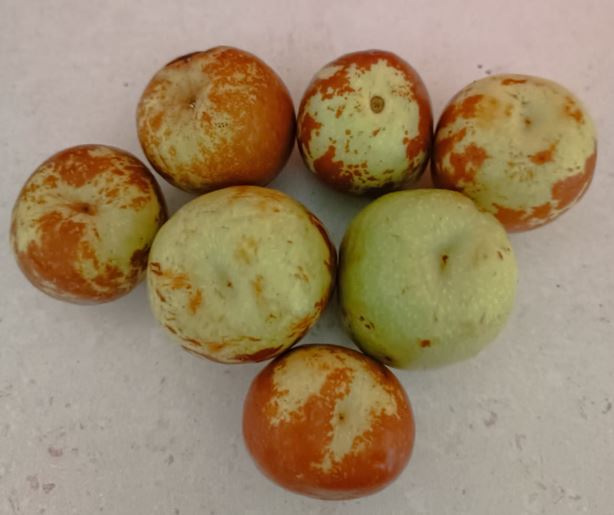
Jujube fruit has a sweet, juicy flesh and a light aroma. The pulp part of the fruit is yellow and has a single seed. Jujube ripens between August and September, depending on the season and weather conditions, and can be dried and stored if desired.


Jujube fruit can be consumed dried or as fresh fruit. However, it is recommended that the drying process be carried out in the sun and open-air conditions. It is common to consume it as a treat in daily use (hosting guests), as a snack or appetizer, and as a dried fruit at breakfast.
In addition to the methods listed here, jam, vinegar and candy are also made. In addition, it is used as fruit juice, fruit tea, herbal powder drink, fruit-based tablet, or as a sweetener/flavoring agent in fruit teas.
It is reported that jujube fruit is an additive in traditional and alternative medicine practices.
Fruit unsuitable for human consumption is also reported to be used as a raw material for animal feed.
If we look at its history briefly, Jujube was brought to America in the 1800s and later found broad areas in Europe, Australia, South and East Asia. Today, more than 90% of the world’s Jujube fruit production is made by China. Jujube cultivation can be done in Turkey’s Marmara, Western and Southern Anatolia regions.
Benefits of Jujube Fruit for Human Health
Jujube fruit has a very high potential to be used to protect our health and treat diseases. It is known that jujube has been consumed since ancient times as a nutritious food that has an important place in traditional medicine in eastern countries. Today, jujube is used as a raw material in the food and pharmaceutical industries.
The known benefits of jujube fruit are as follows;
• Dried jujube fruits are boiled in water to treat stomach disorders,
• Protects the liver,
• Helps relieve cardiovascular diseases,
• Suppresses cancer cell proliferation,
• Helps eliminate blood cholesterol irregularities,
• Contains tannin and mucilaginous substances; therefore, people with diabetes can consume fresh jujube fruit.
• In addition to the ones mentioned here, it is also known among the public to be used as an expectorant, chest softener and diuretic.
• In addition to the fruit pulp, jujube seeds are also used as an insomnia reliever, tonic, sedative,
• May have a positive effect against diseases such as diarrhea, wounds in the stomach and intestines, jaundice and ulcers,
• Has anti-inflammatory and anti-infective, pain-relieving and therapeutic benefits in secondary bacterial disorders,
• It is reported to be very effective in the treatment of intestinal worms.
However, excessive consumption of jujube fruit may cause some adverse effects and side effects, such as low blood pressure, nausea and bloating, fluctuation in blood sugar, and itching on the skin. It is recommended to consume 1 to 4 jujubes a day. It is recommended to consult a doctor for jujube consumption during pregnancy and breastfeeding.
Composition of Jujube Fruit
The main reason why Jujube can provide the benefits listed above is that it is very rich in vitamins, minerals and phenolic compounds. In addition, the fact that Jujube has different enzymes and components makes it very beneficial for health.
Regarding major ingredients, 100 grams Jujube fruit contains 20 grams carbohydrates (mostly dietary fiber), 1.2 grams protein and 0.2 grams fat, and 100 grams Jujube fruit provides approximately 79 kcal energy. Jujube contains high amounts of dietary fiber, which helps regulate digestive problems.
In terms of vitamins, Jujube stands out with its high vitamin C content (70 mg/100 g), which is equivalent to citrus fruits. Jujube is a fruit that is also very rich in vitamin A. The high amount of these vitamins, which have high antioxidant activity, helps Jujube strengthen the immune system and increases its anti-cancer and anti-aging effects.
Jujube fruit also contains niacin (vitamin B3) and riboflavin (vitamin B2). The mentioned vitamins are very important for the body’s hormone and enzyme system.
Jujube is also very rich in minerals. Zinc (Zn), magnesium (Mg), copper (Cu), phosphorus (P), potassium (K), sodium (Na), and iron (Fe) are the main minerals found in Jujube. The mineral found in the highest amount in Jujube is potassium (250 mg/100 g), and the high content of potassium helps regulate blood pressure.
In addition to these components, Jujube also contains other medicinal components such as sterols, alkaloids, saponins, serotonin and triterpenoids.
On the other hand, studies on Jujube, which is not widely known or consumed in Türkiye, are limited. For example, a 2023 study of Junzao jujubes found that later harvesting shortened drying time. Among six harvest stages, S4 had the highest vitamin C content after drying. (Xu et al., 2023) This is an important issue because it is known that the dried form of the fruit is consumed a lot. In other words, the fresh form of this fruit contains a very high amount of vitamin C, but this fruit is dried and consumed mainly as dried fruit.
For these and similar reasons, Jujube needs to be researched more. However, Jujube, whether dry or fresh, is a beneficial fruit and its consumption is beneficial to health.
Note: This article is intended solely for general informational purposes. It is not medical advice or personalized nutritional guidance. Nutritional needs may vary from person to person. Always consult a healthcare professional or a registered dietitian before making any changes to your diet.
References
Kavas, İ., & Dalkılıç, Z. (2015). Bazı hünnap genotiplerinin morfolojik, fenolojik ve pomolojik özelliklerinin belirlenmesi ve melezleme olanaklarının araştırılması. Adnan Menderes Üniversitesi Ziraat Fakültesi Dergisi, 12(1), 57–72.
Preeti, & Tripathi, S. (2014). Ziziphus jujuba: A phytopharmacological review. International Journal of Research and Development in Pharmacy and Life Sciences, 3(3), 959–966.
Gao, Q.-H., Wu, C.-S., & Wang, M. (2013). The jujube (Ziziphus jujuba Mill.) fruit: A review of current knowledge of fruit composition and health benefits. Journal of Agricultural and Food Chemistry, 61(14), 3351–3363.
Zhumatov, U. Zh. (1996). Elementary compositions of the fruits of Morus nigra and Zizyphus jujuba and their biological activities. Chemistry of Natural Compounds, 32(1), 100–101.
Xu, C., Yi, X., Hu, C., et al. (2023). Analysis of the changes in quality and characteristics of hot air drying of Xinjiang jujube (Zizyphus jujuba Mill. cv. Junzao) following a delayed harvest. Scientific Reports, 13, 16732.

Özlem Çakır
Ozlem Cakir, Ph.D., is an Associate Professor at Bayburt University’s Faculty of Engineering, where she works in the Division of Food Sciences within the Department of Food Engineering. She received her B.Sc. in Plant Production from Atatürk University in 2003 and completed both her M.Sc. and Ph.D. in Fruit Growing and Breeding at the same university in 2006 and 2012, respectively. Her formally recognised academic specialisation is Fruit Growing and Breeding within the broader field of Agriculture, Forestry, and Fisheries.
Dr. Cakir has more than twenty years of academic, research, and professional experience in horticulture, fruit science, food processing, and nutrition. From 2010 to 2013, she worked as an agricultural engineer at the Turkish Ministry of Food, Agriculture and Livestock. She subsequently served as Deputy Director of a Research and Application Centre at Bayburt University between 2013 and 2014. Her background enables her to approach fruits and plant-derived foods from both agricultural production and food-processing perspectives.
Her research focuses particularly on cultivated and wild fruits, fruit genetic resources, fruit growing and breeding, biochemical characterisation, phenolic compounds, antioxidants, mineral composition, bioactive plant constituents, extraction processes, drying technologies, and the use of fruit extracts and processing by-products in food systems. Her studies have examined species and genotypes of Berberis, Rosa, Crataegus, Malus, Sorbus, Hippophae, Diospyros, Punica, blackberry, mulberry, loquat, cherry laurel, tea, apricot, grapevine, and other horticultural crops.
Her university profile currently lists 32 peer-reviewed research articles, 20 of which were published in SCI-Expanded-indexed journals. Her work has appeared in journals including Food Chemistry, the Turkish Journal of Agriculture and Forestry, Food Science & Nutrition, Sustainability, the Journal of Food Processing and Preservation, the International Journal of Food Sciences and Nutrition, Scientia Horticulturae, Applied Fruit Science, and the Journal of Food Measurement and Characterization. She has also contributed to two chapters in an international scientific book addressing agricultural resource use and sustainability.
Dr. Cakir has presented or co-authored 47 national and international conference contributions, including 42 international papers or presentations. These studies cover fruit cultivation and breeding, wild fruit biodiversity, antioxidant activity, phenolic profiles, mineral composition, organic agriculture, drying and extraction methods, food-processing technologies, and the use of plant-derived bioactive compounds in food products.
She has participated in eight scientific research projects as a project leader, researcher, or scholarship holder. Her project work has included the characterisation of wild pomegranate and apricot-plum genetic resources; the biochemical and antioxidant properties of wild apple, Berberis, Rosa, and other regional fruits; the optimisation of extraction conditions for aromatic plants; the use of fruit extracts as natural antioxidants in meat products; the application of Berberis fruit in ice cream; and the characterisation of exopolysaccharides produced by lactic acid bacteria. She has also supervised nine master’s theses, seven of which are recorded as completed, on subjects including wild fruits, phenolic compounds, antioxidant activity, pectin extraction, food safety systems, nutritional habits, fermentation, and functional food ingredients.
Her teaching experience includes undergraduate and graduate courses in Fruit and Vegetable Processing Technology, Fruit and Vegetable Juice Technology, Beverage Technology, Fruit and Vegetable Drying Technology, Food-Derived Antioxidants, Methods for Determining Antioxidant Activity in Foods, Sensory Evaluation of Foods, Food and Nutrition, Nutrition Principles, Organic Agriculture, Food Packaging, Special Foods Technology, and Industrial Food Waste and By-products.
As an author for Gıda ve Sağlık, Dr. Cakir contributes her expertise in fruit science, wild and cultivated fruits, antioxidants, phenolic compounds, food processing, organic agriculture, and nutrition to the preparation of scientifically grounded and accessible articles for an international readership.